A home can look tidy while still holding onto grease, dust, pet hair, soap buildup, and allergens in the places everyday cleaning misses. The best deep cleaning tasks focus on those high-impact areas first, so your time produces a home that feels genuinely fresher, not just picked up.
Deep cleaning does not need to mean doing every room, surface, and closet in one exhausting day. For busy households, the practical approach is to target the tasks that improve hygiene, indoor air quality, and the overall look of the space. Then, maintain those areas with regular cleaning between deeper visits.
The Best Deep Cleaning Tasks to Prioritize
Start with the rooms and surfaces that collect the most moisture, food residue, traffic, or dust. A kitchen used daily, a busy family bathroom, or an entryway shared with pets will usually need attention before a guest room that stays closed most of the week.
1. Degrease kitchen cabinets, backsplash, and range hood
Cooking grease does not always look dramatic, but it leaves a sticky film on cabinet doors, handles, backsplashes, and the exterior of the range hood. That film traps dust and can make a clean kitchen look dull. Use a surface-safe degreaser and microfiber cloth, paying close attention to the handles and the cabinet fronts near the stove.
The range hood filter may also need a deeper wash. If the filter is removable, follow the manufacturer’s instructions. Built-up grease can be stubborn, so this is one task that benefits from patience and the right cleaning product rather than aggressive scrubbing.
2. Clean inside major kitchen appliances
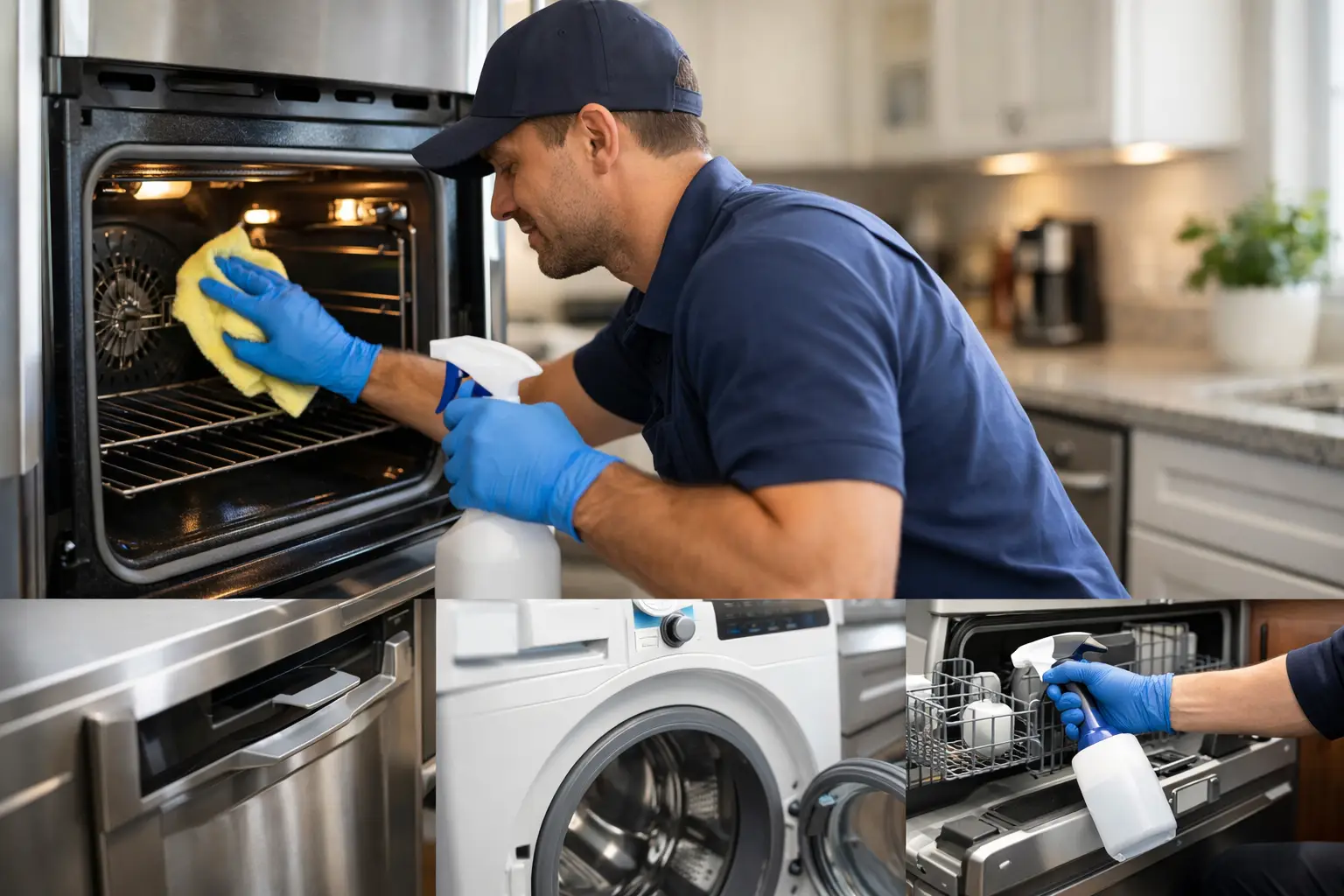
The refrigerator, oven, microwave, dishwasher, and small appliances all collect residue that routine wipe-downs do not address. Remove refrigerator shelves and drawers when possible, clean spills under the crispers, and discard expired food. In the oven, focus on baked-on splatters and racks, using a method appropriate for its finish and self-cleaning settings.
Do not overlook the microwave ceiling and the dishwasher filter. These small areas can hold grease, food particles, and odors. Appliance deep cleaning is especially worthwhile before hosting, moving, or setting up a recurring cleaning routine.
3. Remove soap scum and mineral deposits in bathrooms
Bathrooms need more than a quick wipe of the sink and toilet. Deep cleaning means treating soap scum on shower walls and glass, mineral buildup around faucets, residue on tile, and grime around the toilet base. The best product depends on the surface. Natural stone, for example, should not be treated with acidic cleaners.
Work from high to low: vents and light fixtures first, then mirrors, counters, fixtures, shower walls, toilet exterior, and floors. Letting an appropriate cleaner sit briefly can reduce scrubbing and help protect finishes.
4. Scrub grout, caulk lines, and overlooked edges
Grout lines, shower-door tracks, and caulk edges collect moisture and body-care residue. These spots can discolor quickly in frequently used bathrooms, particularly where ventilation is limited. A targeted grout brush and a surface-safe cleaner can make tile look significantly brighter.
If staining does not improve with cleaning, it may be permanent discoloration or a maintenance issue rather than dirt alone. Cracked caulk, recurring mildew, or water damage should be addressed by the appropriate repair professional before it becomes a larger problem.
5. Dust ceiling fans, vents, and light fixtures
Dust is not limited to furniture. Ceiling fan blades, air vents, return grilles, and light fixtures quietly collect it over months. When fans are turned on, loose dust can move through the room and settle back onto floors and surfaces.
Use a stable step stool and a microfiber cloth that captures dust instead of simply pushing it around. For vents, clean the cover gently and avoid spraying liquid directly into the system. If you see substantial buildup inside ducts or notice persistent airflow issues, professional HVAC service may be more appropriate than surface cleaning.
6. Wipe walls, doors, trim, and baseboards
Fingerprints around switches, scuffs on doors, dust on trim, and grime along baseboards can make a room feel less clean even after the floors are vacuumed. These details are easy to miss because they sit at eye level or below it, but they create a noticeable difference once cleaned.
Use a lightly damp microfiber cloth and test cleaners in an inconspicuous area, especially on painted walls. Flat paint can mark easily, while glossy trim may tolerate a bit more cleaning. Gentle, steady work is safer than using abrasive pads that can damage the finish.
7. Deep clean floors, rugs, and upholstery
Floors carry in dirt, salt, moisture, pollen, and pet hair. Vacuuming carefully along edges, under furniture, and around baseboards is the first step. Hard floors should then be cleaned with a product suited to the material, whether vinyl, tile, hardwood, or laminate.
Carpet and upholstery need a different approach. Spot treatment can help with fresh spills, but deep extraction is often the better choice for embedded soil, pet odors, and high-traffic paths. Always check fabric and flooring care instructions. Too much moisture or the wrong cleaner can leave water marks, residue, or damage.
8. Clean windows, tracks, and blinds
Window glass may get attention before guests arrive, but tracks and blinds are where dust, dead insects, and moisture buildup tend to hide. Vacuum loose debris from tracks first, then wipe them with a damp cloth. For blinds, use a microfiber tool or cloth and clean both sides of each slat.
Window cleaning can brighten a room immediately, but safety comes first. Interior glass and accessible exterior windows are reasonable cleaning tasks; high or difficult-to-reach exterior windows are better left to properly equipped professionals.
9. Sanitize high-touch surfaces throughout the home
Door handles, cabinet pulls, light switches, remotes, railings, faucet handles, and refrigerator handles are touched constantly. They do not always look dirty, which is exactly why they get skipped. Cleaning removes visible soil, while sanitizing can reduce germs on appropriate hard, nonporous surfaces.
Use products according to their label directions, including required contact time. Never mix cleaning chemicals, particularly bleach and ammonia-based products. For households with children, pets, or sensitivities, choose products carefully and allow surfaces to dry fully.
10. Tackle laundry areas and utility spaces
Laundry rooms often collect lint, detergent residue, dust, and clutter. Wipe the washer gasket and detergent tray if applicable, clean around the machines, and vacuum behind or beside them when it is safe to do so. The dryer lint trap should be emptied after every load, while the surrounding area deserves periodic attention.
A dryer vent issue is not just a cleaning concern. If clothes take too long to dry or lint is accumulating unusually fast, arrange professional inspection and service. This is one of the tasks where safety matters more than checking a box on a cleaning list.
11. Clean under and behind furniture and appliances
The hidden spaces behind sofas, under beds, and beneath appliances can hold surprising amounts of dust, pet hair, crumbs, and lost items. These areas matter most for households with pets, allergy concerns, or heavy daily traffic.
Move lightweight furniture carefully and avoid shifting heavy appliances without the right equipment. Refrigerators, stoves, and washers can damage floors, disconnect lines, or create safety risks if moved improperly. A professional cleaning team can handle accessible areas thoroughly while respecting the limits of the space and equipment.
12. Refresh entryways and frequently used storage areas
Entryways work hard. They collect dirt from shoes, wet umbrellas, bags, and outdoor gear before any of it reaches the rest of the home. Deep clean the floor, door, handles, mat, nearby walls, and storage bench or closet. Wash or replace mats that no longer trap dirt effectively.
Also take time to wipe inside the most-used cabinets, pantry shelves, and bathroom drawers. You do not need to reorganize your entire house for this task to be useful. Removing crumbs, product residue, and expired items makes everyday maintenance easier.
Build a Deep Cleaning Plan That Fits Your Home
The right schedule depends on your household. Homes with pets, young children, smokers, frequent cooking, or allergy concerns may benefit from deeper attention every few months. A lightly used home may only need a full deep clean seasonally, supported by consistent weekly or biweekly upkeep.
Instead of trying to complete every task at once, divide the work by room or book a professional deep cleaning before beginning recurring service. A detailed checklist helps make expectations clear: what is included, what needs special attention, and which add-on services, such as carpet, upholstery, appliance, or post-renovation cleaning, will make the greatest difference.
For Hamilton households and businesses that need dependable help with the heavier work, Get It Done Cleaning Services provides detailed cleaning support with trained, insured cleaners and practical service options. A well-planned deep clean gives you a clean starting point – and makes it much easier to keep your space feeling comfortable, healthy, and ready for daily life.