A clean home does not need to cost you every free hour on Saturday. The right weekly house cleaning checklist focuses on the areas that collect the most dirt, germs, pet hair, and everyday clutter, so your space stays comfortable between deeper cleanings.
For busy families, professionals, renters, and pet owners, consistency matters more than perfection. A few focused tasks completed on a regular schedule can prevent soap scum from hardening, crumbs from attracting pests, and floors from becoming a source of dust and allergens. Use this checklist as a practical baseline, then adjust it for the size of your home, the number of people in it, and how you use each room.
Start With a Simple Weekly Cleaning Routine
Weekly cleaning works best when you begin with the same basic preparation each time. Put away obvious clutter, gather your supplies, and work from the cleanest areas of the home toward the dirtiest. Cleaning top to bottom also helps. Dust first, wipe surfaces next, then vacuum or mop the floors last.
You do not need a cabinet full of products. A dependable routine usually calls for an all-purpose cleaner, bathroom cleaner, glass cleaner, microfiber cloths, a scrub brush or sponge, a vacuum, and a mop. For households with children, pets, or sensitivities, choose eco-friendly products that are effective without leaving behind harsh odors.
If the whole house feels like too much to tackle at once, divide the work into short sessions. Cleaning the bathrooms one evening and handling floors the next is still far better than waiting until the mess becomes overwhelming.
Weekly House Cleaning Checklist by Room
Kitchen
The kitchen deserves weekly attention because it handles food, grease, moisture, and heavy daily traffic. Start by clearing counters and putting away items that do not belong there. Wipe countertops, backsplashes, cabinet handles, and small appliances with an appropriate cleaner.
Clean the sink thoroughly, including the faucet base and drain area where residue can build up. Wipe the exterior of the refrigerator, dishwasher, microwave, and stove, paying special attention to handles and control panels. Sweep or vacuum under the table and along baseboards, then mop the floor.
Your kitchen checklist should also include these recurring tasks:
- Empty old food from the refrigerator and wipe visible spills from shelves.
- Clean inside the microwave if splatters are present.
- Replace dishcloths and sanitize sponges as needed.
- Take out trash and recycling, then wipe the inside rim of the bin.
A weekly wipe-down keeps grease and food residue manageable. The oven interior, refrigerator shelves, and cabinet fronts usually need a deeper cleaning less often, unless there has been a spill or a busy week of cooking.
Bathrooms
Bathrooms can look clean while still collecting soap film, hair, and moisture in places that are easy to miss. Begin with the toilet, using a dedicated cleaner for the bowl and a disinfecting product for the seat, lid, flush handle, and exterior. Clean the sink, faucet, countertop, and mirror next.
Spray the shower and tub, allowing the cleaner to sit briefly before scrubbing. Give extra attention to corners, shower doors, fixtures, and the area around the drain. Rinse well and dry glass surfaces when possible to reduce water spots.
Finish by replacing towels, emptying the trash, wiping light switches and door handles, and mopping the floor. If your household has long hair, pets, or several people sharing one bathroom, a quick midweek sweep may be worth adding.
Bedrooms and Living Areas
These rooms often need less disinfecting than kitchens and bathrooms, but they collect dust, hair, lint, and clutter quickly. Make beds, return clothing to closets or hampers, and clear bedside tables and other flat surfaces. Dust furniture, lamps, window ledges, picture frames, and electronics using a dry or lightly damp microfiber cloth.
In living rooms, straighten cushions, fold blankets, and wipe coffee tables, side tables, remotes, and commonly touched switches. Vacuum upholstered furniture if pets use the sofa or chairs regularly. This is a simple step that can make a noticeable difference in both appearance and indoor air quality.
Vacuum rugs and hard floors throughout bedrooms and main living spaces. Move lightweight furniture when practical, but do not turn a weekly routine into a full furniture-moving project. Areas behind heavy pieces can be saved for monthly or seasonal cleaning.
Entryways, Hallways, and High-Touch Surfaces
Entryways do more work than most people realize. Dirt, salt, leaves, and moisture come in on shoes, bags, paws, and wheels. Shake out mats, sweep or vacuum the area, and mop when needed. Keeping this zone under control helps protect the rest of your floors.
Wipe high-touch surfaces throughout the home, including doorknobs, light switches, stair rails, cabinet pulls, remote controls, and commonly used drawer handles. This task is especially useful during cold and flu season or when someone in the household has been sick.
Do Not Forget the Floors
Floors are often the final step because they catch everything that falls during cleaning. Vacuum carpets and rugs slowly enough to lift embedded dust, especially in hallways, around seating areas, and near pet beds. Use the correct setting for hard floors to avoid scratching delicate surfaces.
Sweep hard floors before mopping, then use a cleaner suited to the material. Too much water can damage some wood and laminate flooring, so a damp mop is often the better choice. Tile floors can handle more moisture, but grout lines may need occasional extra attention.
How often you clean floors depends on the household. A single adult in a low-traffic apartment may be fine with weekly vacuuming, while a home with children, dogs, or muddy outdoor conditions may need quick touch-ups several times a week.
What to Save for Monthly or Deep Cleaning
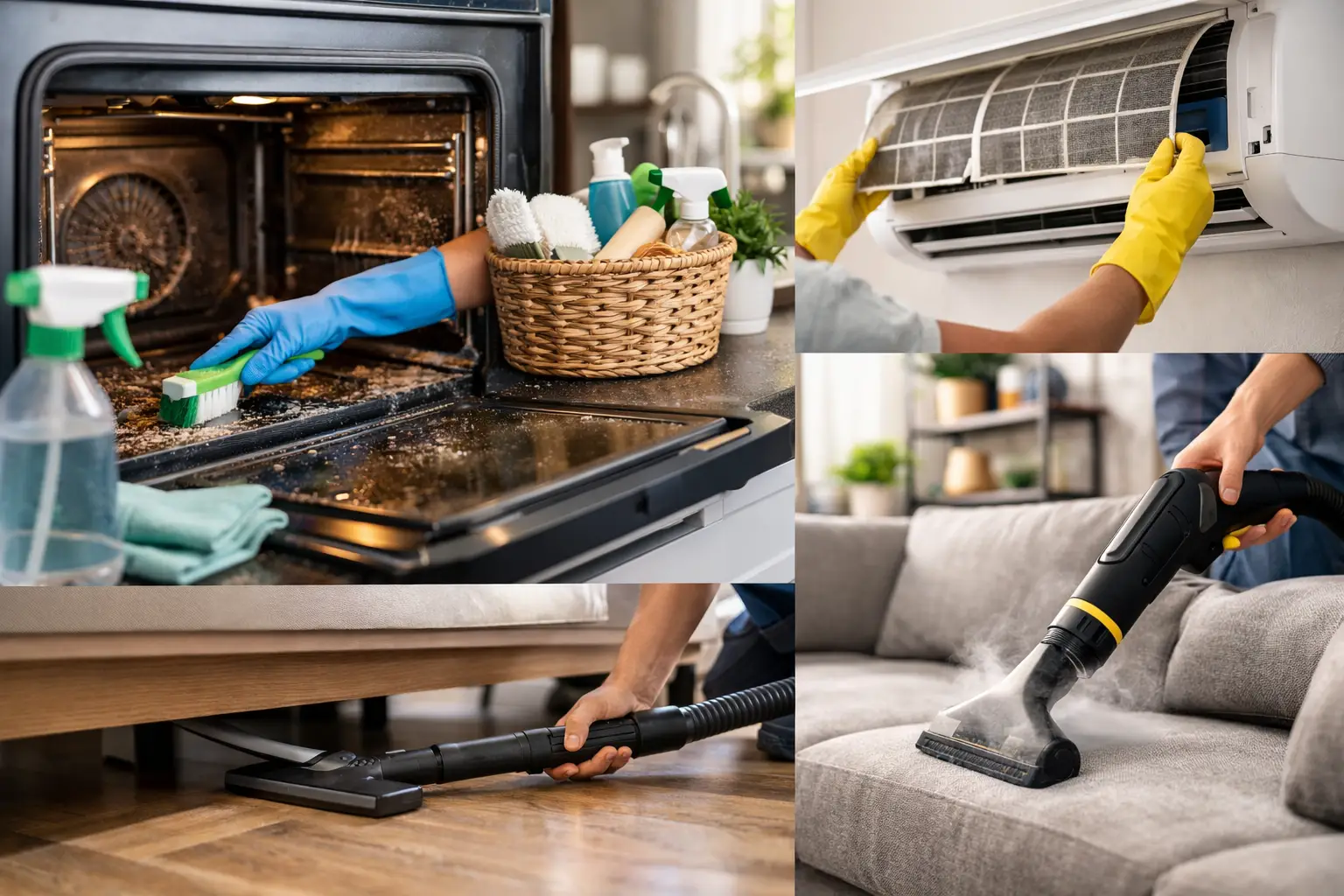
A weekly checklist should make your home easier to maintain, not create an impossible standard. Some jobs are better handled monthly, seasonally, or as part of a professional deep cleaning service. These include cleaning inside the oven, washing baseboards, dusting ceiling fans, wiping blinds, cleaning behind appliances, treating carpet stains, and scrubbing grout.
The trade-off is simple: skipping these details occasionally is reasonable, but leaving them for too long allows buildup to become harder and more time-consuming to remove. If you are preparing for guests, moving, recovering from a renovation, or catching up after a demanding season, a deeper service can restore the home without sacrificing your entire weekend.
Make the Checklist Fit Your Household
The best cleaning schedule is one you can actually keep. A household with pets may add pet-hair removal and odor control. Families with young children may prioritize sanitizing high-touch surfaces and cleaning floors more frequently. If you work long hours, a 20-minute daily reset paired with a focused weekly cleaning session can be more realistic than trying to do everything at once.
It also helps to assign tasks by room or by person. One person can handle bathrooms while another vacuums and mops. Even children can contribute by picking up toys, sorting laundry, or wiping low surfaces with safe products. Clear responsibilities prevent cleaning from becoming one person’s unpaid full-time job.
For Hamilton households that need a dependable hand with recurring upkeep, Get It Done Cleaning Services can provide structured, detail-focused cleaning that fits your schedule. Professional support is especially helpful when regular cleaning keeps slipping down the list, but a clean and healthy home still matters.
Keep your checklist visible, give yourself permission to adjust it after busy weeks, and focus on the tasks that make your home feel genuinely cared for. A routine that is sustainable will always serve you better than a perfect plan that never gets done.