
A vacant rental can look acceptable at first glance and still turn off a qualified applicant in minutes. Sticky cabinet handles, dusty vents, shower buildup, and crumbs in an oven signal that the property was not fully reset. This rental turnover cleaning example shows what a thorough, practical clean looks like between tenants – and where a professional cleaning team can save property owners and managers valuable time.
The goal is not simply to make the unit look tidy. Turnover cleaning prepares the space for a new resident, supports a better move-in experience, and helps maintain the condition of surfaces, appliances, and fixtures over time. The exact scope depends on how the previous tenant left the property, how long it sat vacant, and whether repairs or painting are scheduled.
What a Rental Turnover Cleaning Example Includes
Consider a two-bedroom, one-bath apartment that has just been vacated. The outgoing tenant removed their belongings and did a basic sweep, but the kitchen has grease around the stove, the bathroom has soap residue, and the floors need more than a quick mop. Before cleaning starts, the property manager should complete a walkthrough and document any damage, missing items, or repairs needed.
Once repairs are complete, the cleaning process should move from high surfaces to low surfaces and from dry work to wet work. This prevents dust and debris from landing on areas that have already been cleaned.
Entry, living room, and bedrooms
The team begins by removing leftover trash and checking closets, cabinets, drawers, and storage areas for abandoned belongings. Baseboards, window ledges, doors, trim, blinds, ceiling fans, vents, and light fixtures are dusted. Cobwebs are removed from corners and ceilings.
Walls should be spot-cleaned where possible, especially around switches, door frames, and high-touch areas. A cleaning crew can remove many marks, but scuffs, holes, and stains that require paint or patching should be handled as maintenance work rather than covered up with aggressive scrubbing.
Hard floors are vacuumed along edges and under reachable furniture, then washed with a product suitable for the surface. Carpeted rooms receive a detailed vacuum, including corners and closets. If there are pet odors, visible staining, or heavy traffic paths, carpet cleaning may be the more appropriate next step. A standard turnover clean cannot always correct issues embedded deep in carpet fibers.
Kitchen
The kitchen is often the deciding factor in whether a rental feels move-in ready. Start with the inside and outside of cabinets and drawers, removing crumbs, dust, and residue. Handles, hinges, backsplashes, counters, sinks, faucets, and switch plates receive focused attention.
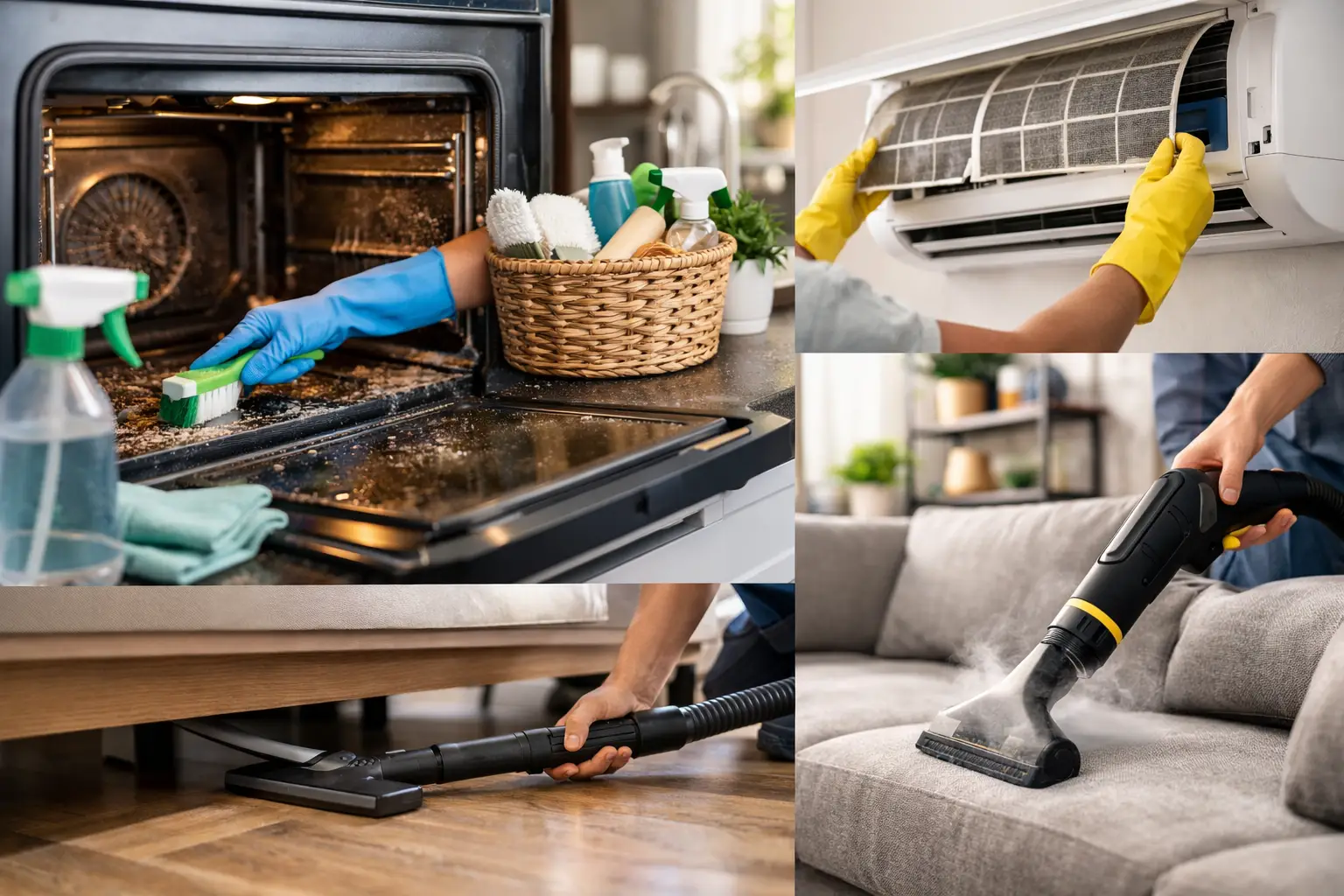
Appliances need a separate standard. The refrigerator should be emptied, shelves and drawers wiped, and exterior handles polished. The oven interior, racks, cooktop, range hood, and microwave should be degreased according to the appliance material and manufacturer guidance. Grease buildup may require extra time and specialty products, particularly when a tenant has cooked frequently without using the hood fan.
Finish by cleaning the floor under and around appliances where accessible. This is an easy area to miss during routine cleaning and one of the first places pests and odors can develop.
Bathroom
In the bathroom, disinfect high-touch points such as toilet flush handles, faucets, light switches, and door handles. Clean the toilet inside and out, including the base and surrounding floor. The shower or tub, tile, grout, glass, vanity, mirror, sink, and fixtures should be washed until soap film, toothpaste splatter, and hard-water marks are addressed.
Caulking and grout deserve a careful inspection. Cleaning can improve their appearance, but cracked caulking, persistent mildew, or damaged grout should be repaired. This distinction matters: a clean bathroom is essential, but cleaning is not a substitute for maintenance that protects the property from moisture damage.
A Practical Turnover Cleaning Checklist
A reliable cleaning scope should be visible and specific. For a typical vacant unit, it should cover these core areas:
- Remove leftover trash and sweep out closets, cabinets, and storage spaces.
- Dust accessible vents, fans, blinds, ledges, baseboards, trim, and light fixtures.
- Wipe doors, handles, switches, cabinet fronts, and other high-touch surfaces.
- Clean and disinfect kitchens and bathrooms from top to bottom.
- Clean the inside and outside of agreed-upon appliances.
- Vacuum carpets and wash hard-surface floors, including edges and corners.
- Check for final details such as fingerprints on glass, debris in drawers, and odors in drains or refrigerators.
The word “agreed-upon” matters. A vacant apartment with normal use may need a standard deep turnover cleaning. A home with construction dust, heavy nicotine residue, pet accidents, or grease buildup may require post-renovation cleaning, odor treatment, carpet extraction, or appliance add-ons. Clear scope prevents last-minute surprises for both the owner and the cleaning provider.
The Final Walkthrough Makes the Difference
After the cleaning is complete, conduct a final walkthrough with the same perspective as a new tenant. Open the refrigerator. Look inside the oven. Run a hand across a window ledge. Check the shower drain, the tops of doors, and the floors along baseboards. Turn on lights and inspect the unit in normal lighting, since residue and missed dust are often more visible once the space is bright.
This walkthrough is also the right time to confirm practical move-in details. Are all trash bins empty? Have cleaning cloths and supplies been removed? Are toilets flushed and seats clean? Is there a fresh, neutral smell rather than a heavily fragranced cover-up? A professionally cleaned rental should feel clean because it is clean, not because it has been masked with fragrance.
For property managers with multiple turnovers, a consistent checklist also creates accountability. Every unit may need different add-ons, but the baseline standard should remain the same. That consistency makes scheduling easier, helps protect reviews, and gives incoming tenants confidence from day one.
When to Schedule Professional Turnover Cleaning
The best time to book is after the outgoing tenant has fully moved out and after major repair work is finished. If painters, contractors, or maintenance staff still need access, schedule the detailed cleaning after their work whenever possible. Otherwise, new dust, footprints, and debris can undo the final result.
For tight turnover windows, coordinate cleaning, repairs, carpet service, and inspections in advance. A dependable cleaning provider can work from a defined checklist and identify concerns that should be passed to the property manager, such as damaged blinds, persistent odors, or visible mold-like staining. The cleaner should not make repair decisions, but early notice helps prevent delays.
Get It Done Cleaning Services provides detailed move-in and move-out cleaning for property transitions in Hamilton, with flexible service options for kitchens, bathrooms, carpets, appliances, and other high-priority areas. Insured, trained cleaners and eco-conscious products help make the process easier for owners, tenants, and managers who need the space ready on schedule.
A well-cleaned rental does more than photograph well for the next listing. It tells the incoming resident that the property has been cared for, and that first impression can set a better tone for the entire tenancy.