
You do not notice how many corners a place has until move-out week. The couch is gone, the wall art is down, and suddenly every dust line, drip mark, and forgotten crumb is out in the open. That is why move out cleaning for renters is not just about making the place look nice. It is about protecting your deposit, avoiding last-minute conflict, and handing over the unit in a condition that feels fair to everyone involved.
A lot of renters underestimate this stage because they are focused on packing, changing addresses, and getting keys for the next place. Cleaning becomes the task you save for the end, right when your energy is lowest. That is usually when details get missed, and those details are often what landlords or property managers notice first.
Why move out cleaning for renters matters
A move-out clean sits in a different category from routine housekeeping. Weekly cleaning keeps a home livable. Move-out cleaning is more detailed because it has to deal with the buildup left behind after months or years of normal life. Think grease above the stove, dust behind furniture, soap film in the shower, and scuffs around switches and baseboards.
For renters, the stakes are practical. A cleaner unit can help support a smoother inspection and reduce the chance of charges tied to cleanliness. It also helps separate actual wear and tear from things that simply needed to be cleaned. That distinction matters. Faded paint or older flooring may be expected over time, but food residue in the oven or grime inside the fridge usually is not.
There is also the human side. Leaving a place clean is a professional, respectful way to close out a lease. If you need a landlord reference later, that final impression can help.
What landlords usually expect
Most landlords are not looking for a staged, magazine-ready unit. They are looking for a rental that has been emptied, cleaned, and left in good condition. The exact standard depends on your lease, the property type, and how strict management is, but in most cases they expect the next person to walk into a space that feels sanitary and cared for.
That means surfaces wiped down, floors cleaned, bathrooms sanitized, appliances emptied and cleaned, and obvious marks or buildup addressed. Areas hidden during daily living become part of the inspection once the place is empty. Under appliances, inside cabinets, closet shelves, window tracks, and vent covers all get more attention than renters expect.
If your lease includes specific cleaning clauses, follow those first. Some properties require carpet cleaning, appliance cleaning, or proof of professional service. If the lease language is vague, aim for a level of cleanliness that would feel acceptable if you were the incoming tenant.
The areas renters miss most often
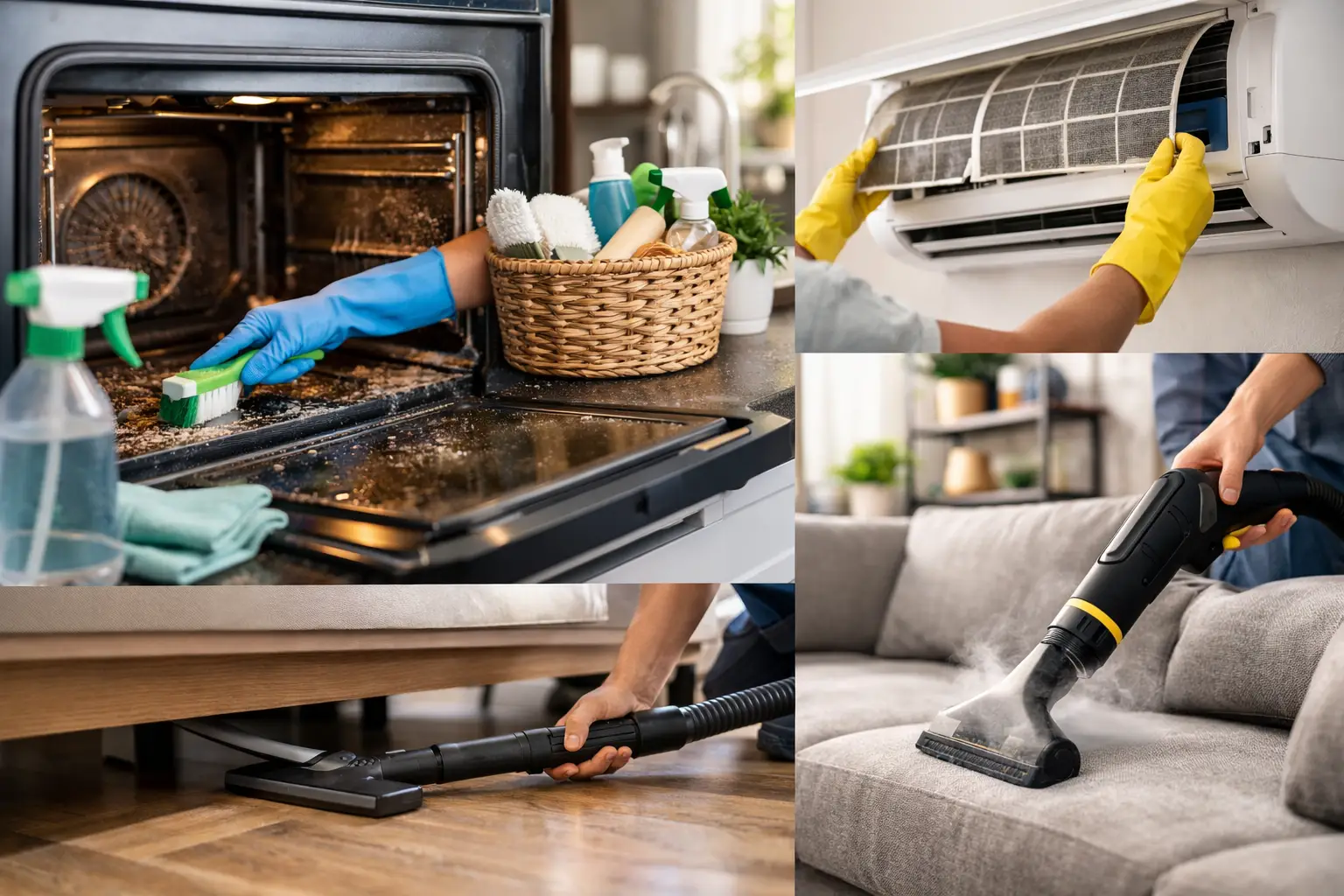
The kitchen is usually the biggest trouble spot. It is not the visible counters that cause problems. It is the grease film on cabinet fronts, crumbs in drawer tracks, residue in the microwave, and spills baked into the oven. The refrigerator can also become an issue if shelves, drawers, seals, and the area underneath are not cleaned.
Bathrooms come next. A bathroom can look clean at a glance and still fail inspection if there is mineral buildup around fixtures, soap scum on glass, hair in drawers, or grime around the toilet base. Exhaust fans and light fixtures are also easy to forget.
Throughout the rest of the unit, baseboards, door frames, blinds, and inside closets are common misses. So are nail holes, scuff marks, and dust on ledges that were covered by furniture for most of your lease.
Should you do it yourself or hire help?
It depends on your timeline, the size of the unit, and how much detail work it needs. If you kept the home in very good condition, have a full day available, and are comfortable cleaning appliances and bathrooms thoroughly, a DIY move-out clean may be enough.
But many renters run into the same problem. They plan to clean after moving everything out, then the move takes longer than expected. By the time they return to clean, they are tired, short on supplies, and under pressure to hand over keys. That is when corners get cut.
Professional move-out cleaning makes the most sense when time is tight, the unit has not had a recent deep clean, or you want more confidence before inspection. A trained team works from a checklist, moves faster, and usually catches details that are easy to overlook when you are rushing. For renters balancing work, family, pets, and a move across town, that convenience is not a luxury. It is often the difference between a stressful handoff and a smooth one.
A practical move out cleaning for renters checklist
Start with the empty unit, not before. Cleaning around packed boxes wastes time and makes it harder to see what actually needs attention.
In the kitchen, clean inside and outside of cabinets and drawers, wipe countertops and backsplash, sanitize the sink, and remove grease from the stovetop, hood area, and cabinet faces. Clean the oven if your lease expects it, and do not forget the refrigerator interior, shelves, seals, and floor underneath if it can be moved safely.
In the bathroom, scrub the tub or shower, descale fixtures, disinfect the toilet fully, wipe mirrors, clean vanity drawers, and mop the floor carefully around edges. If there is mildew or stubborn buildup, address it early because those spots take longer than expected.
For living areas and bedrooms, dust from top to bottom, including shelves, trim, blinds, vents, and closet interiors. Wipe doors, handles, and switch plates. Patch minor holes if allowed, remove marks where possible, and vacuum or mop after everything else is done.
If the unit has carpet, inspect it honestly. Light vacuuming may be enough in some cases, but pet hair, stains, or ground-in dirt often require deeper treatment. The same goes for upholstery if any furnished elements are included in the rental.
How to avoid deposit disputes
Documentation matters almost as much as cleaning. Before you leave, take clear photos of each room after it has been emptied and cleaned. Include appliances, bathrooms, floors, walls, and any pre-existing damage you noted at move-in. Good records help if there is disagreement later about condition.
It also helps to compare your move-out condition to your move-in photos, if you have them. Some issues are normal wear, not neglect. A professional, well-documented clean makes that easier to show.
If you are hiring a service, choose one that is clear about scope. You want to know what is included, what costs extra, and whether appliance interiors, baseboards, or inside cabinets are part of the job. Transparency prevents surprises and helps you match the service to the lease requirements.
When professional cleaning is worth it
Not every rental needs the same level of work. A studio you lived in for one year is different from a family home with pets, children, and heavy daily use. The more life happened in the space, the more likely it is that hidden buildup has developed.
Professional cleaning is especially worth considering if you are moving on a tight deadline, turning over a larger property, or leaving a unit that needs more than surface-level attention. For renters in Hamilton managing a busy move, a detailed service from a dependable local company like Get It Done Cleaning Services can take a major task off your plate and give you a clearer path to a smooth inspection.
The best results come from booking early, before your move date gets crowded. End-of-month schedules fill quickly, and waiting too long can limit your options.
Timing your clean the right way
The best moment to clean is after the unit is fully empty and before the final walkthrough. That gives you a clean slate and lets every surface be accessed properly. If painters, movers, or junk removal crews are still coming through, wait until they are done. Otherwise, dust and marks can come right back.
Try to leave a buffer between cleaning and key return. Even a few extra hours helps if you spot a missed shelf, a drip in the fridge, or footprints near the entry. Rushed handoffs create avoidable stress.
Moving out is already a lot to manage. A careful clean will not solve every part of the process, but it does give you one less thing to worry about when the final inspection happens.