
If a cleaning appointment is on the calendar and you’re wondering how to prepare for house cleaners, the good news is this: you do not need to clean before the cleaners arrive. You do, however, want to set the space up so your cleaning team can focus on the work you are paying for. A little prep helps them clean more thoroughly, move more efficiently, and avoid wasting time sorting through personal items.
For most households, the goal is not perfection. It is access. When counters are buried, floors are covered in toys or laundry, and important instructions are only half shared, even a skilled team has to spend part of the visit figuring things out. That is why the best prep is simple, practical, and focused on making your home ready for professional attention.
How to prepare for house cleaners without overdoing it
Think of preparation as a short reset, not a deep clean. If you spend 20 to 30 minutes on the right tasks, the appointment usually runs smoother and the results are better.
Start by picking up everyday clutter. This means clothing off the floor, dishes out of the sink if possible, paperwork stacked neatly, and toys placed in bins or in one designated area. Cleaners can wipe, scrub, dust, and sanitize much more effectively when they can reach the actual surfaces.
This step matters most in high-use spaces like kitchens, bathrooms, and living rooms. If the coffee table is covered with mail and chargers, it may not get dusted properly. If the bathroom counter is packed with products, it takes longer to clean around them. You do not need to hide your life. Just clear enough space for the work to happen.
Focus on access, not appearances
One common mistake is assuming the home has to look guest-ready before a cleaning team arrives. It does not. Professional cleaners are there to handle real homes with real daily mess. What helps most is making key areas accessible.
If there are rooms you want prioritized, make sure the team can get into them easily. Unlock any doors that need to be opened, move lightweight furniture only if necessary, and make sure walkways are clear. If a room is off-limits, say so clearly rather than leaving the team to guess.
For pet owners, this is especially important. If your dog is friendly but excited, or your cat tends to slip out open doors, make a plan ahead of time. Some households prefer to crate pets during the visit, while others keep them in a separate room. There is no single right answer, but cleaners should be able to work safely without worrying about stress for the animal or interruptions for the crew.
What to put away before cleaners arrive
Professional cleaning teams are trained to work carefully, but it is still smart to put away anything valuable, fragile, or highly personal. This protects your belongings and removes uncertainty for everyone.
Jewelry, cash, prescription medications, sensitive paperwork, and small electronics are best stored in a drawer, cabinet, or room that does not need service. The same goes for sentimental items that would be difficult to replace. Even in a trustworthy, insured service environment, putting these things away is simply good preparation.
You should also clear surfaces that are covered with many breakable decorations. A few well-placed items are usually fine, but a shelf packed with fragile pieces can slow down dusting and create more risk than necessary. If detailed dusting is part of the service, less crowding means better results.
Leave clear instructions, especially for first visits
The first appointment often takes the most communication. After that, the process usually becomes easier because your cleaners understand the layout, your priorities, and any special requests.
If there are problem areas you want addressed, say so directly. Maybe the upstairs bathroom needs extra attention, the baseboards in the hallway have collected pet hair, or the kitchen floor near the stove needs a deeper scrub. Specific instructions are more useful than broad requests like “please clean really well.” Good cleaning teams appreciate clarity because it helps them deliver what matters most to you.
It also helps to mention anything unusual about the home. If one door sticks, one faucet leaks slightly, or one room should not be entered, share that before the visit starts. This is not about making things complicated. It is about preventing confusion and keeping the appointment efficient.
Prepare your kitchen and bathrooms first
If you only have time to do a little prep, focus on kitchens and bathrooms. These are usually the rooms where access has the biggest impact on the final result.
In the kitchen, try to clear the sink and counters as much as you can. If dishes are left out, cleaners may not know whether to work around them, wash them, or leave them untouched unless that is part of the agreed service. Wiping around a toaster is one thing. Cleaning a counter hidden under groceries, lunch containers, and unopened mail is another.
In bathrooms, remove used towels from the floor, pick up clothing, and gather personal items from counters if possible. Toothbrushes, razors, cosmetics, and hair tools can all be moved to a drawer or basket during the visit. This gives the team room to disinfect properly rather than clean around everything.
Know what is included and what is not
One of the easiest ways to avoid disappointment is to understand the scope of service before the cleaners arrive. A standard recurring cleaning is not the same as a deep cleaning, and a move-out job is not the same as regular maintenance.
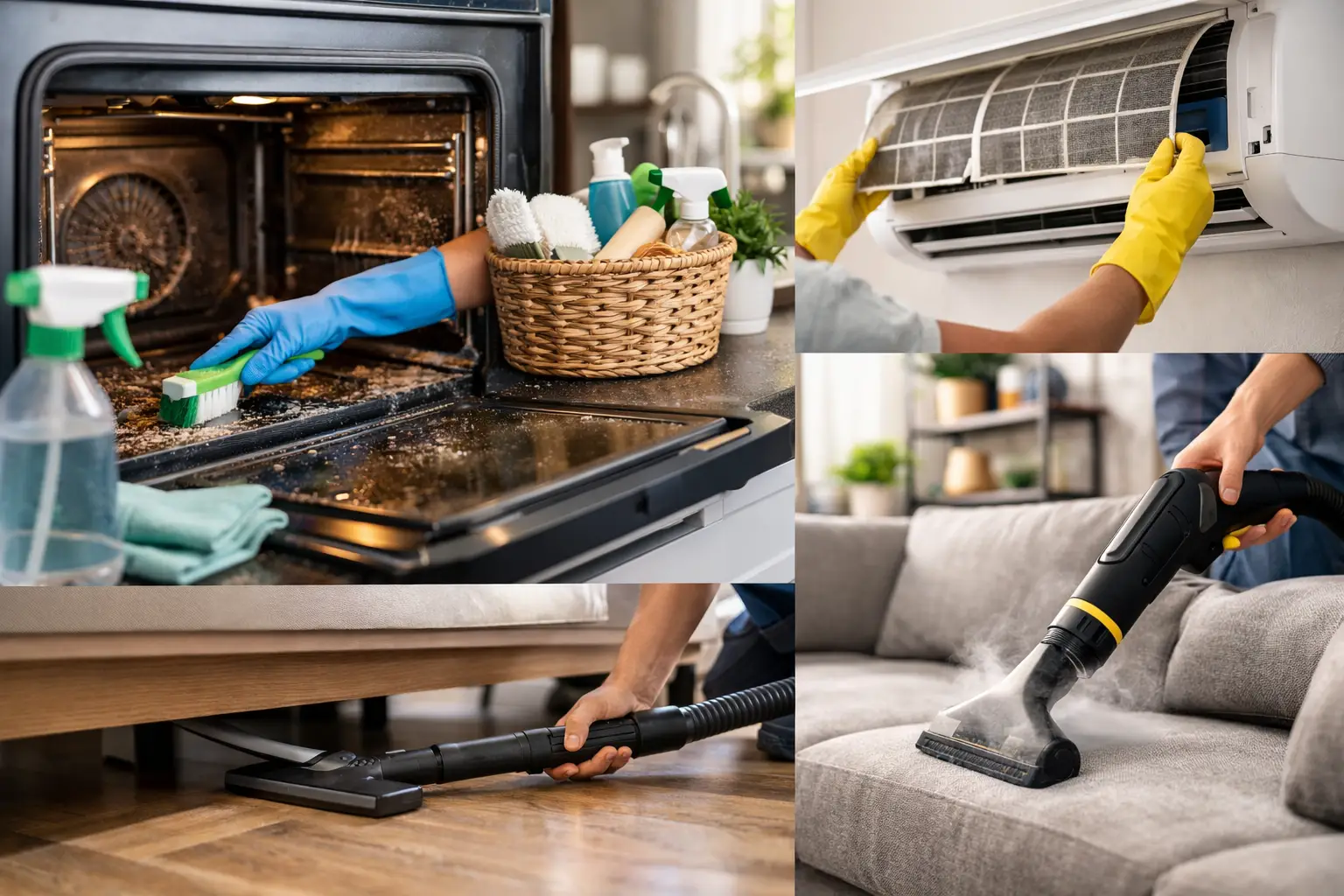
If your home has not been professionally cleaned in a while, or if there is heavy buildup in areas like baseboards, inside appliances, grout lines, or behind furniture, a deeper service may be the better fit. If you expect those details but booked a lighter visit, the mismatch can create frustration on both sides.
This is where a checklist helps. Reliable companies make their service tiers clear so you know what to expect. That transparency matters. It helps you prepare the home appropriately and decide whether add-ons like appliance cleaning or post-renovation detail work are worth scheduling.
Should you stay home during the cleaning?
It depends on your comfort level, your schedule, and the type of service. Some customers prefer to be present for the first visit so they can answer questions and walk through priorities. Others would rather leave and come back to finished results.
Either option can work well. If you stay home, try to give the team room to do their job without having to work around constant movement. If you leave, make sure entry instructions are clear and any alarm, parking, or lockup details are handled ahead of time.
For businesses, rentals, or managed properties, this kind of access planning becomes even more important. Keys, codes, loading areas, and timing windows should all be confirmed in advance so the cleaning crew can get started without delays.
Small prep steps that make a big difference
A few simple habits can improve the whole appointment. Secure pets, put away valuables, clear clutter from floors, and identify priority areas. If bedding is being changed as part of the service, leave clean linens out where they are easy to find. If certain products should be avoided on a specific surface, mention that before the work begins.
And if there is a space you do not want cleaned because someone is sleeping, working, or storing private items there, communicate that upfront. Professional cleaners want to meet expectations, not guess at them.
A dependable service should make the process feel easier, not stressful. That is the standard companies like Get It Done Cleaning Services aim for – clear scope, trained and insured staff, and practical service that respects your time and your space.
Preparing for a cleaning visit is really about helping the appointment deliver its full value. When your team can walk in, get to work, and focus on cleaning instead of sorting, you get better results where they count most – cleaner surfaces, healthier spaces, and one less thing pulling at your day.