A deep clean is for the places regular tidying rarely reaches: the grease behind the stove knobs, dust along baseboards, buildup in shower corners, and fingerprints on doors and switches. A clear deep cleaning services checklist makes the difference between a home that looks briefly refreshed and one that feels genuinely clean, healthy, and ready to enjoy.
For busy households, renters preparing for a move, pet owners, and anyone catching up after a demanding season, detail matters. The right service should explain what is included, what requires an add-on, and how the cleaning team will treat your home with care.
What a Deep Cleaning Service Should Cover
Deep cleaning goes beyond a standard recurring visit. Regular maintenance cleaning is designed to manage the surfaces used every day. A deep clean focuses on accumulated dust, soap scum, grease, and grime in high-touch and hard-to-reach areas.
The exact scope can vary by home size, condition, number of bathrooms, pets, and whether the property has been cleaned professionally before. Still, a dependable cleaning company should provide a visible, room-by-room scope rather than leaving customers to guess what “deep clean” means.
A thorough service generally includes detailed dusting, wiping, vacuuming, and mopping throughout the home, along with extra attention to bathrooms, kitchens, baseboards, doors, fixtures, and buildup-prone areas. Eco-friendly products can be used effectively for many household surfaces, though specialty stains, heavy mineral deposits, or restoration-level conditions may need additional treatment.
Deep Cleaning Services Checklist by Room
A room-by-room checklist helps you compare quotes fairly. It also gives you a practical way to communicate priorities before the team arrives.
Kitchen
The kitchen is often the most labor-intensive room because grease, food residue, and daily use build up quickly. A detailed kitchen cleaning should include wiping cabinet fronts and handles, cleaning countertops and backsplashes, sanitizing the sink and faucet, and cleaning the exterior of major appliances.
Professionals should also wipe the microwave inside and out, clean the stovetop and range hood exterior, remove surface crumbs from drawers where accessible, and vacuum or mop beneath reachable edges. Floors should be cleaned with attention to corners, baseboards, and the area around the garbage bin.
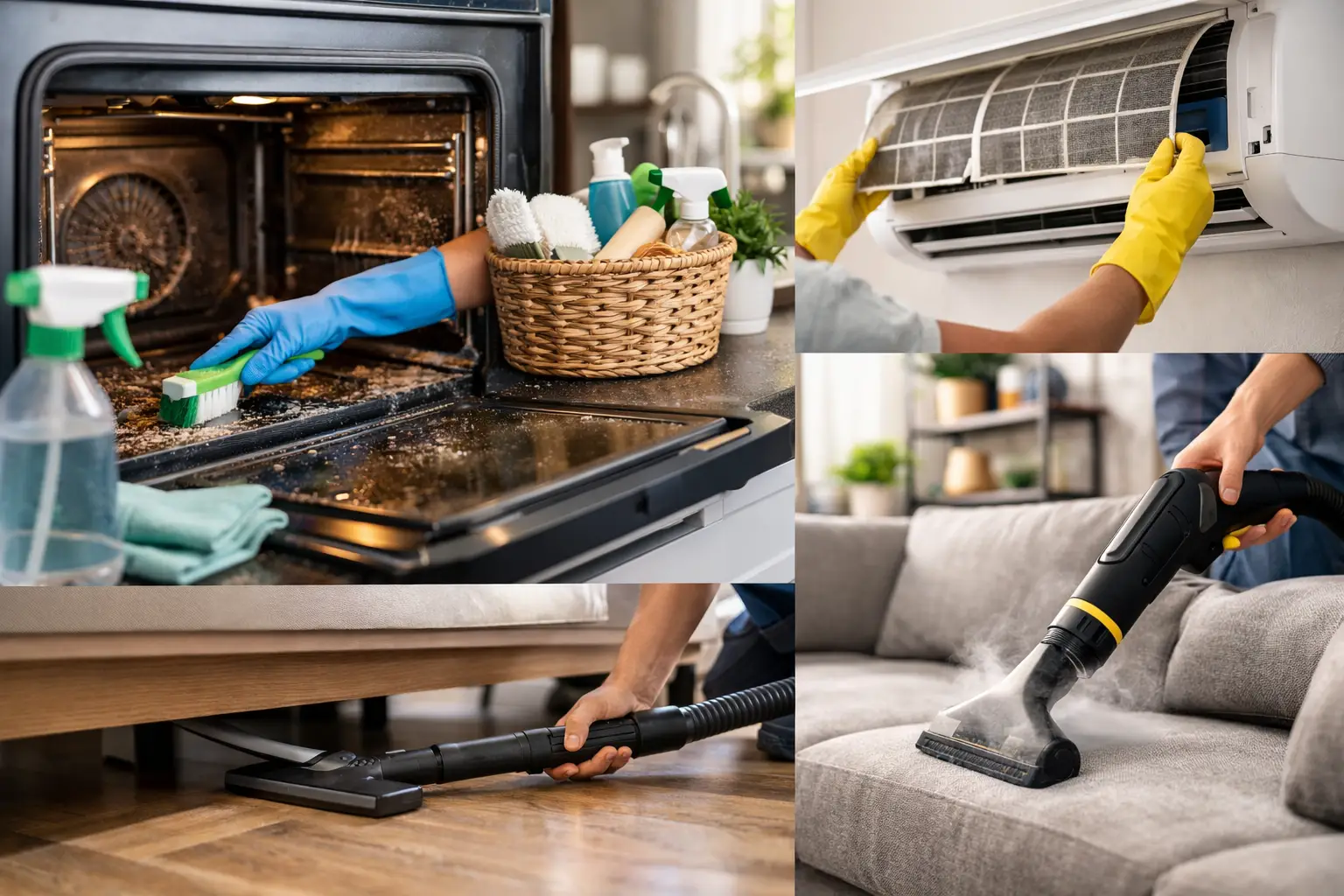
Appliance interiors are often separate services. If you need the inside of the oven, refrigerator, dishwasher, or cabinets cleaned, ask specifically. These tasks take additional time and may not be included in a base deep-cleaning package.
Bathrooms
Bathrooms need more than a quick wipe-down. The goal is to remove soap scum, mineral buildup, dust, and germs from the surfaces people touch most often.
A complete bathroom checklist should cover toilets inside and out, tubs, showers, shower doors, tile, grout surface cleaning, sinks, faucets, mirrors, counters, and cabinet exteriors. Cleaners should also dust vents, wipe light fixtures where safely accessible, clean door handles and switch plates, and mop the floor around the toilet base and behind doors.
Hard-water staining and deeply discolored grout can improve with professional cleaning, but results depend on the material and how long buildup has been present. A trustworthy team will set realistic expectations rather than promise that every stain can be removed in one visit.
Bedrooms and Living Areas
In bedrooms, living rooms, hallways, and other shared spaces, deep cleaning focuses on the overlooked details that affect the whole feel of a home. This includes dusting furniture, ledges, blinds, window sills, ceiling fan blades, and accessible vents.
A detailed service should also include wiping doors, frames, handles, switch plates, and baseboards; vacuuming carpets and rugs; and mopping hard floors. Upholstered furniture can be vacuumed where appropriate, but deep carpet and upholstery extraction are specialty services that should be booked separately when needed.
If your household includes pets, mention that before scheduling. Pet hair, tracked-in dirt, and odor concerns can affect the time needed and may call for carpet or upholstery cleaning as an add-on.
Entryways, Laundry Rooms, and Other High-Touch Areas
Entryways collect dust, debris, and marks quickly, especially in homes with children, pets, or frequent visitors. A deep clean should address interior doors, trim, floors, reachable wall marks, and the surfaces around the entrance.
Laundry rooms and utility spaces benefit from dust removal around appliances, wiping shelves and exterior machine surfaces, and cleaning floors around accessible edges. These smaller areas are easy to overlook, yet they can hold a surprising amount of lint and dust.
What Is Usually Not Included
Clear boundaries protect both the customer and the cleaning team. Most standard deep cleaning services do not include hazardous cleanup, mold remediation, pest removal, exterior window washing, lifting or moving heavy furniture, or cleaning areas that cannot be safely reached.
Wall washing, inside cabinets, inside appliances, interior windows, post-renovation dust removal, and pressure washing may also be separate services. That does not mean they are unavailable. It means the work should be quoted based on the actual condition and time required.
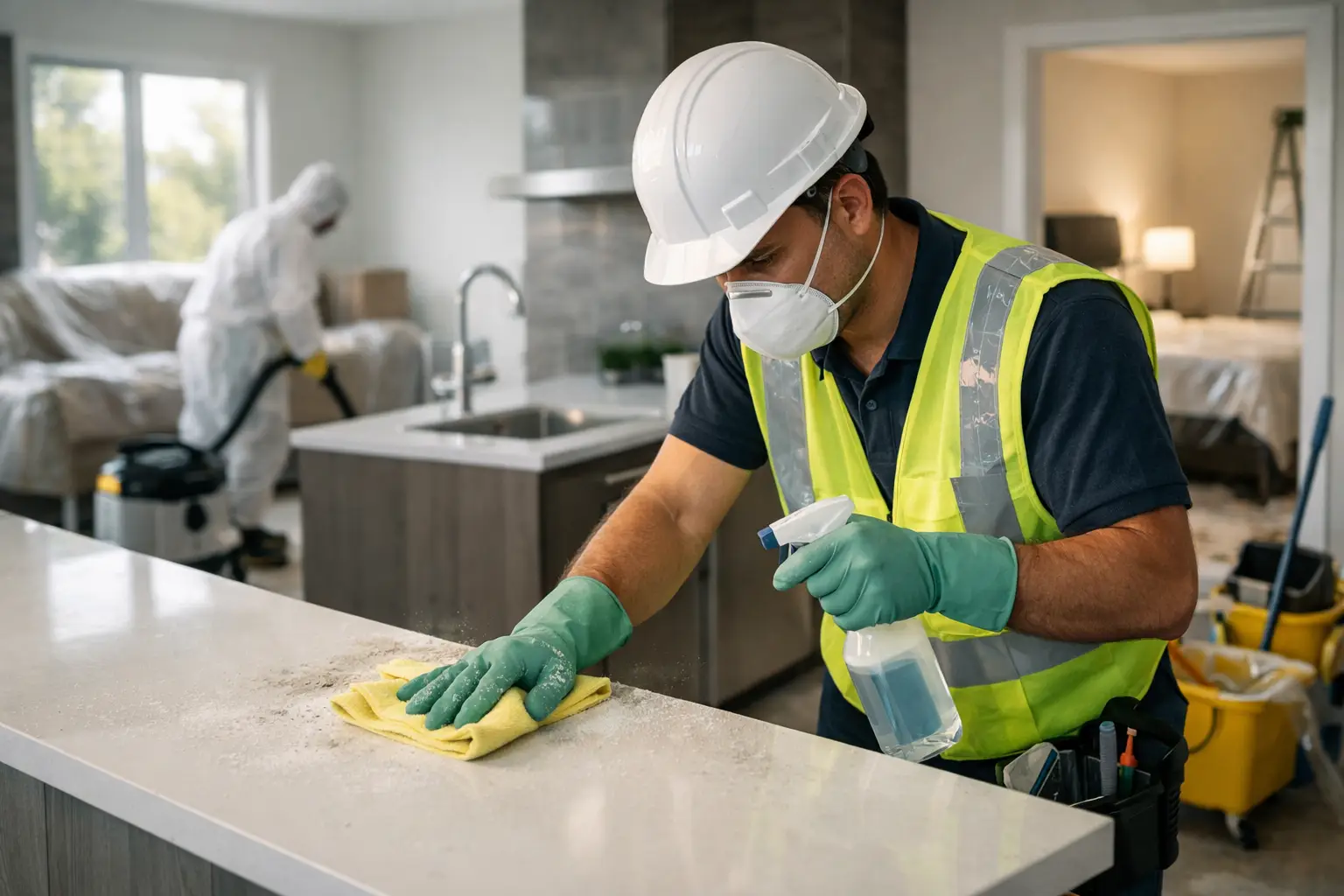
For example, a home that needs a reset before beginning recurring service may only need a standard deep clean. A property with construction dust after remodeling needs a post-renovation cleaning plan, which involves different tools, more detailed dust control, and added attention to surfaces throughout the property.
How to Prepare for a Better Deep Clean
You do not need to clean before professional cleaners arrive. That is the point of booking help. However, a little preparation lets the team spend more time on detailed cleaning instead of sorting through personal items.
Put away clothing, paperwork, toys, and other loose belongings from floors and counters. Let the team know about fragile items, rooms that should not be entered, pets in the home, and any surfaces that need special care. If there are stains, odors, or problem areas you want addressed, point them out at the beginning of the visit.
Access matters, too. Confirm parking instructions, entry details, alarm procedures, and the best way to reach you during the appointment. For move-out or move-in cleaning, make sure the home has running water and electricity. Cleaners cannot deliver complete results without both.
Questions to Ask Before You Book
A lower price is not always a better value if the scope is vague. Ask whether the company is insured, whether cleaners are trained, which products are used, and whether the service has a satisfaction process if something is missed.
It also helps to ask how long the service is expected to take, whether supplies and equipment are included, and which tasks are considered add-ons. If you are comparing services in Hamilton, request a written checklist so you can see exactly what each quote covers.
Get It Done Cleaning Services builds cleaning plans around visible scope, trained and insured staff, flexible scheduling, and the detailed work homes and businesses need. A one-time deep clean can also be a practical starting point before moving into recurring service, since routine visits are easier to maintain after buildup has been addressed.
When to Schedule a Deep Clean
Most homes benefit from a deep cleaning every few months, but the right schedule depends on how the space is used. Families with young children, pets, allergies, or heavy kitchen use may want more frequent detailed cleaning. Homes with lighter traffic may schedule a deep clean seasonally and maintain the results with recurring service in between.
A deep clean is especially useful before hosting guests, after illness, at the start of a new lease, before listing a home, or once renovation work is complete. The best time is often before the home feels overwhelming. Booking early gives you more scheduling options and a cleaner baseline to maintain.
A good checklist is not about chasing perfection. It is about knowing your home is receiving the careful, practical attention it needs, from the surfaces everyone sees to the details that make a space feel truly cared for.