The best cleaning schedule for offices is not the one with the most tasks on paper. It is the one your workplace can maintain consistently without interrupting employees, visitors, or daily operations. A small office with ten people has different needs than a busy clinic, retail back office, or shared workspace with constant foot traffic. The right plan keeps high-touch areas sanitary, common spaces presentable, and deeper cleaning on track before dirt becomes a bigger problem.
For most offices, the most effective approach is a layered schedule: quick daily attention where people touch and gather, more detailed weekly service, and planned monthly or seasonal deep cleaning. This structure creates a professional environment without paying for unnecessary work.
Start with how your office is actually used
Before assigning tasks by day or week, look at what happens in the space. Employee count matters, but traffic patterns matter more. An office with 15 employees and frequent client meetings may need more lobby and restroom service than an office with 30 remote-first employees who come in twice a week.
Walk through the office at the end of a typical day. Notice where fingerprints collect, which trash cans fill first, whether the break room counters stay clear, and how quickly restroom supplies run low. These are the areas that should shape your routine.
A practical schedule should also account for your industry. Medical-adjacent spaces, childcare offices, fitness facilities, and customer-facing businesses generally need more frequent disinfection than a low-traffic professional office. Carpeted spaces may look clean for weeks while holding dust, allergens, and tracked-in debris, so appearance alone should not set the schedule.
A daily office cleaning routine
Daily cleaning protects the areas employees and visitors notice immediately. It also reduces the spread of germs in the places people share most often. For a typical office, daily service should happen after business hours or during a quiet period so cleaning does not disrupt work.
Focus first on restrooms. Empty waste bins, replace liners, clean and disinfect toilets and sinks, wipe mirrors, replenish soap and paper products, and mop floors as needed. A restroom that is technically clean but missing supplies still creates a poor impression, which is why restocking belongs in the same checklist.
The break room or kitchen is another daily priority. Wipe counters, tables, appliance handles, and sinks; remove food waste; spot-clean cabinet fronts; and clean visible spills from floors. Shared kitchens can develop odors quickly, especially when lunch waste sits overnight.
Reception areas, meeting rooms, and entrances should receive daily attention too. Empty trash, straighten furniture, wipe high-touch surfaces, and spot-clean glass doors or partitions. Vacuum or sweep entryways to remove salt, mud, leaves, and other debris brought in from outside.
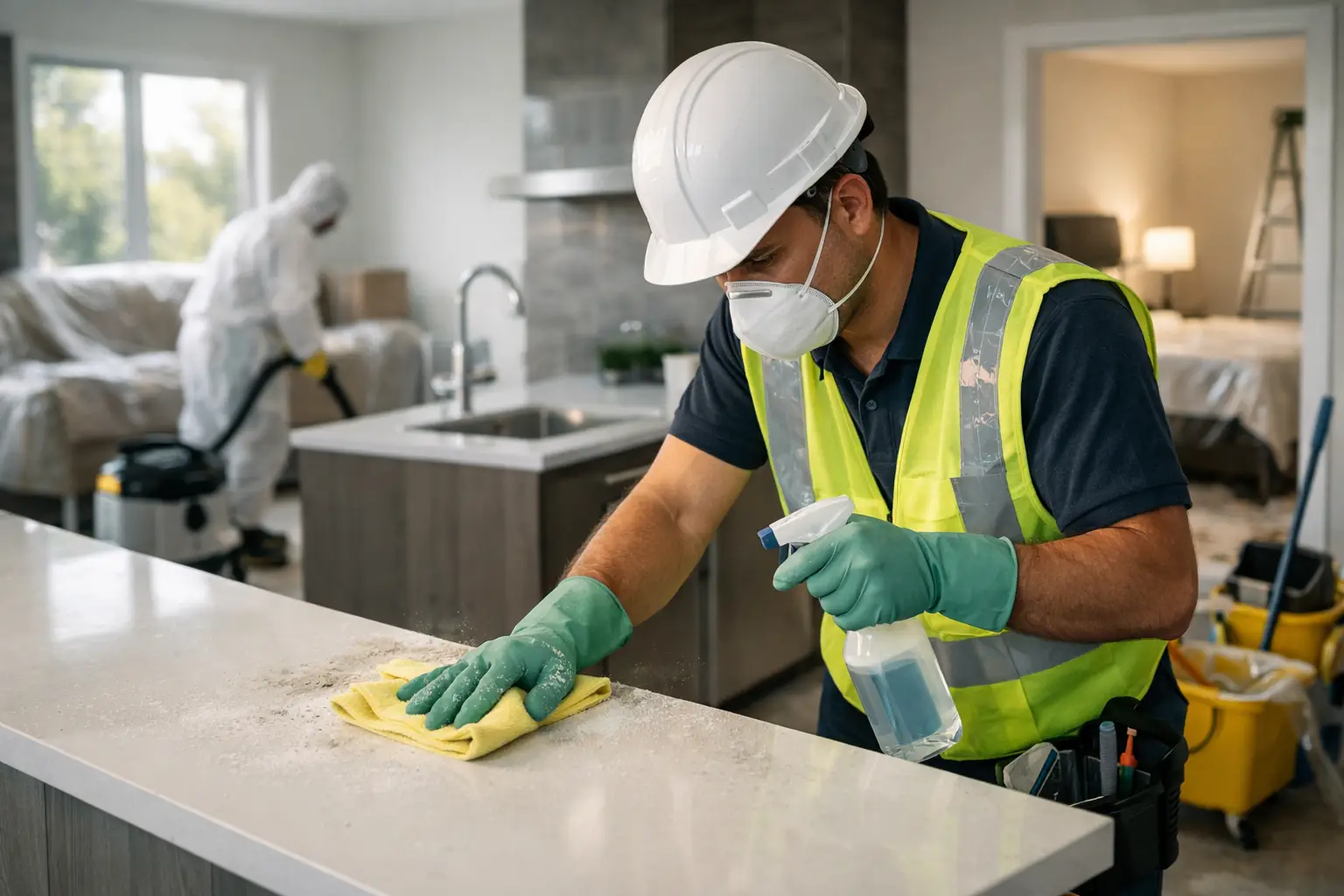
High-touch disinfection is most useful when it is targeted. Door handles, elevator buttons, light switches, shared keyboards, copier controls, fridge handles, and conference room remotes deserve regular cleaning. There is little value in spraying every surface repeatedly if commonly touched points are being missed.
Weekly tasks in the best cleaning schedule for offices
Weekly cleaning handles the buildup that daily service is not designed to remove. This is where an office starts to feel genuinely cared for rather than simply picked up.
Vacuum all carpeted areas thoroughly, including under accessible furniture and around workstation edges. Hard floors should be mopped beyond obvious spots, with attention to corners, baseboards, and areas beneath tables. In wet Canadian winters, offices may need extra floor care to prevent salt residue and grit from damaging surfaces.
Dust desks, window ledges, shelves, chair bases, blinds, and reachable vents. Employees should clear personal items from their desks if those surfaces are included in the cleaning scope. Clear expectations prevent confusion and help cleaners work efficiently without handling sensitive paperwork or personal belongings.
Weekly service is also the right time to clean interior glass, polish fingerprints from doors, wipe down chair arms, and sanitize shared equipment. Conference rooms deserve a closer reset: clean tables and chairs, remove old markers or abandoned supplies, wipe screens and controls, and check beneath the table for food debris.
Do not overlook waste and recycling areas. Wipe bins inside and out as needed, clean surrounding floors, and address lingering odors. A clean office can still feel unpleasant when garbage storage areas are neglected.
Monthly and quarterly deep-cleaning tasks
Some jobs do not need daily attention, but they should not wait until they become visible problems. Monthly or quarterly cleaning protects the condition of your office and can reduce the need for more expensive restoration work later.
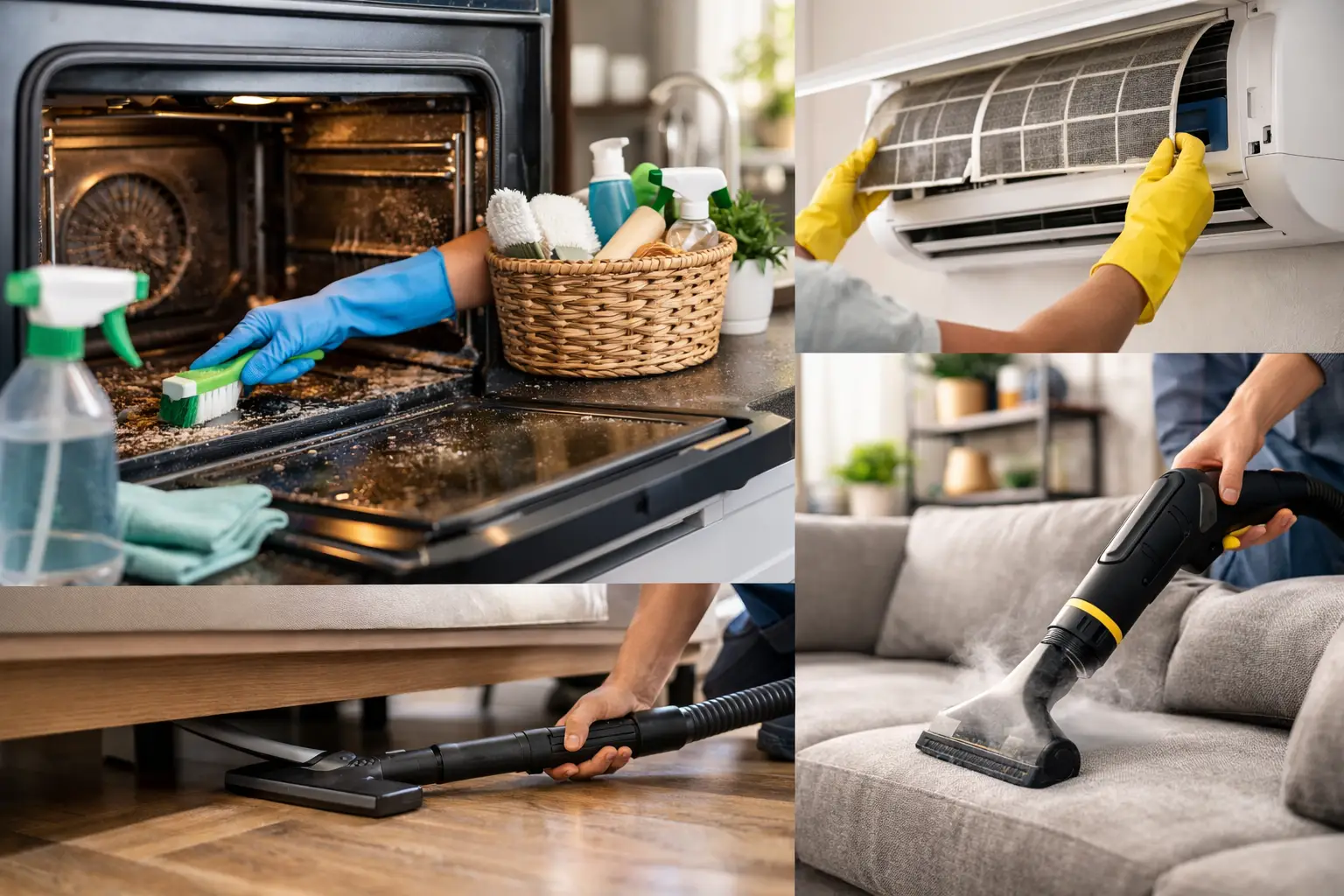
Schedule a deeper cleaning of baseboards, door frames, vents, blinds, wall marks, and light fixtures. Clean behind and beneath movable furniture, especially in break rooms and reception areas. Detail kitchen appliances, including microwave interiors, refrigerator shelves, and coffee stations, based on how heavily they are used.
Carpet cleaning should be planned separately from routine vacuuming. Many offices benefit from professional carpet cleaning every six to twelve months, while high-traffic entrances, waiting areas, and spaces exposed to snow or rain may need it more often. Upholstered lobby chairs and fabric partitions also collect dust and should be included in a periodic maintenance plan.
Windows, pressure washing, post-renovation cleanup, and appliance cleaning are often project-based services rather than part of a standard recurring visit. Adding them at the right time keeps the regular checklist focused while ensuring the entire property receives proper care.
Choose the right frequency for your workplace
There is no single cleaning frequency that works for every business. A useful starting point is to match service levels to occupancy and client traffic.
A low-traffic office with a small team may be well served by professional cleaning once or twice a week, paired with employees handling minor spills and personal desk organization. A medium-traffic office with shared restrooms, a kitchen, and regular visitors often benefits from three to five visits per week.
Daily cleaning is usually the better choice for offices with customer-facing reception areas, multiple restrooms, food service, high employee density, or stringent sanitation expectations. If your team frequently hosts interviews, presentations, or clients, the appearance of the office is part of the customer experience.
Budget matters, but cutting frequency too far can create avoidable costs. When restrooms, floors, and break rooms are skipped for long periods, cleaners need more time to bring the space back to standard. A consistent recurring plan is often more predictable and affordable than repeatedly booking intensive catch-up cleaning.
Make the schedule easy to manage
A cleaning schedule only works when everyone understands the scope. Create a clear checklist that identifies daily, weekly, and periodic tasks, along with the areas included during each visit. It should state who provides supplies, where waste is stored, how cleaners access the building, and which rooms require special handling.
It also helps to assign one workplace contact who can report concerns and approve changes. That person does not need to manage every detail. They simply need a reliable way to communicate issues such as a spill in the lobby, an event that requires extra service, or a restroom supply that is running low.
For workplaces with confidential information, set boundaries around desks, filing cabinets, and locked offices. Professional cleaners should be trained, insured, and respectful of your space, but a defined scope protects both the client and the cleaning team.
Signs your current schedule needs adjusting
Your office may need more frequent service if restrooms run out of supplies between visits, floors look dirty before the next cleaning, kitchen odors linger, or employees regularly raise cleanliness concerns. Client feedback is another useful signal. Visitors may not mention a dusty ledge, but they will notice an unpleasant restroom or messy entrance.
On the other hand, if certain rooms are rarely used, their service frequency can be reduced without lowering standards. A storage room, occasional-use boardroom, or closed office may only need a light weekly check and a more thorough monthly cleaning. Adjusting the schedule by zone is often smarter than applying the same frequency to every room.
A professional cleaning partner can help assess these patterns and build a plan around your hours, layout, and priorities. Get It Done Cleaning Services provides clear commercial cleaning scopes so Hamilton-area businesses can see what is being cleaned, how often, and where extra attention is needed.
A clean office should feel dependable, not like another task your team has to chase. Build a schedule around real traffic, keep high-use areas on a steady routine, and review the plan as your workplace changes. That is how a professional space stays welcoming day after day.