
The smell is gone, the counters are wiped, and the floor looks clean – but the kitchen can still be working harder than it should. Grease behind the range, crumbs beneath refrigerator drawers, and residue in the dishwasher filter all affect freshness, performance, and sanitation. Kitchen appliance deep cleaning addresses the hidden buildup that a quick weekly wipe cannot reach.
For busy households, renters preparing for a move, and property managers turning over a unit, this work is about more than appearance. A detailed clean can help appliances run more efficiently, reduce lingering odors, and make everyday cooking feel more comfortable. The key is using the right method for each appliance, without damaging finishes, seals, or electrical components.
What Kitchen Appliance Deep Cleaning Should Include
Deep cleaning is not the same as spraying the outside of an appliance and calling it done. It means cleaning the accessible interior parts, surrounding gaps, removable components, handles, controls, and areas where food residue, grease, dust, and moisture collect.
Start by unplugging small appliances and turning off power or gas where appropriate. Let hot surfaces cool completely. Remove food, dishes, racks, shelves, filters, and drip trays before applying any product. This creates a clearer work area and prevents cleaners from coming into contact with food or sensitive components.
For most kitchens, a good deep clean involves four practical steps:
- Remove loose debris with a vacuum, dry cloth, or soft brush.
- Wash removable parts in warm, soapy water when the manufacturer permits it.
- Treat grease and mineral buildup with appliance-safe, nonabrasive cleaning products.
- Dry every cleaned area thoroughly before reinstalling parts or reconnecting power.
Eco-conscious cleaners can work very well for routine buildup, especially when paired with dwell time and careful scrubbing. However, heavy carbon, baked-on grease, or old spills may need a stronger appliance-appropriate product. It depends on the surface and the level of buildup. Harsh abrasives can scratch glass cooktops, stainless steel, and coated interiors, so stronger is not always better.
Deep Cleaning the Appliances That Collect the Most Buildup
Oven and stovetop
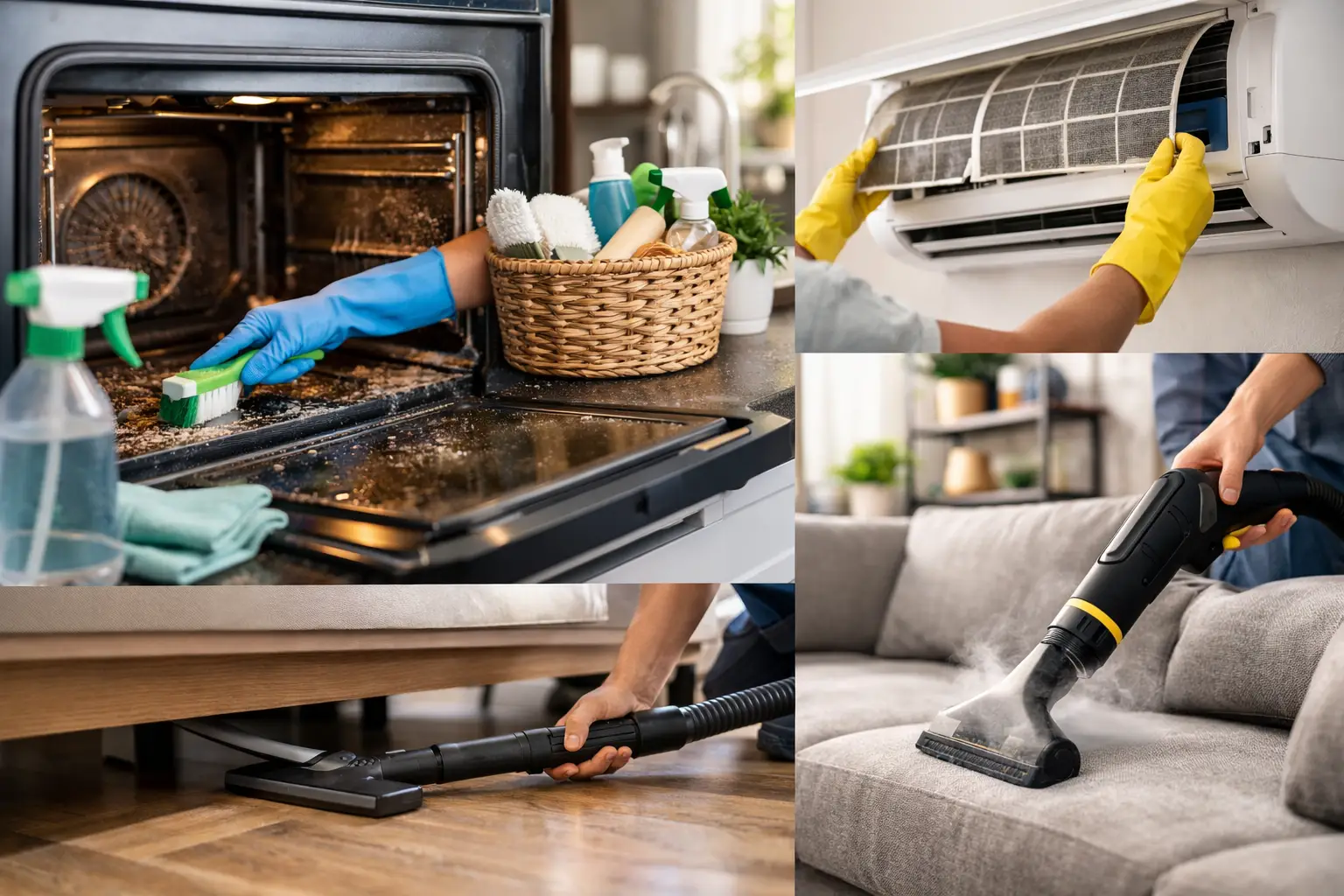
Ovens hold onto grease splatter, burnt food, and smoke residue that can create odors every time the appliance heats up. Remove racks and soak them separately if needed. For the oven interior, use a product approved for the oven’s finish and follow its directions closely. Avoid forcing cleaner into vents, heating elements, or door seals.
The self-clean feature is useful in some situations, but it is not always the best first option. It uses extremely high heat and can create strong odors or smoke, particularly when the oven has significant grease buildup. Older appliances, homes with pets, or households sensitive to fumes may be better served by a manual deep clean. Clean the door glass, knobs, backsplash, and the narrow gaps around the range as part of the same job.
For a glass cooktop, wait until the surface is cool, then use a nonabrasive cleaner and a scraper designed specifically for cooktops when necessary. Do not use steel wool or rough scouring pads. Gas ranges require additional care around burner caps and grates. Make sure every burner component is fully dry and correctly positioned before use.
Refrigerator and freezer
A refrigerator can look neat while hiding spills under crisper drawers, sticky residue on shelf edges, and forgotten food at the back. Remove food first and work in sections so refrigerated items are not left out too long. Take out shelves and drawers according to the manufacturer instructions, allowing cold glass shelves to reach room temperature before washing to reduce the risk of cracking.
Wipe the interior walls, shelf tracks, door seals, and handles with a food-safe cleaning solution. Pay close attention to the gasket around the door, where crumbs and moisture can prevent a tight seal. If the refrigerator has a removable drip pan or accessible water dispenser tray, those areas should also be cleaned.
Do not forget the exterior. Dust on refrigerator coils and vents can affect airflow, although access varies by model. If coil cleaning is accessible and safe, vacuum gently with the appliance unplugged. When access is limited, leave the task to a trained professional rather than pulling or dismantling parts that could be damaged.
Dishwasher
A dishwasher is designed to clean, but it still needs regular maintenance. Food particles, grease, detergent film, and mineral deposits can collect in the filter, spray arms, door edges, and bottom basin. That buildup can leave dishes smelling less fresh or appearing cloudy after a cycle.
Remove and rinse the filter following the appliance manual. Use a soft brush for trapped debris, then wipe the door seal and detergent compartment. Check spray-arm holes for visible blockage and clear them gently if the manufacturer allows it. A dishwasher-safe cleaning cycle can help remove interior residue after the filter and visible debris have been addressed.
If water remains in the bottom of the appliance, the dishwasher has recurring odors, or it is not draining properly, cleaning may not be enough. Those signs can point to a clogged drain line, failing part, or plumbing issue that needs service.
Microwave, range hood, and small appliances
Microwaves often collect splatters on the ceiling and around the door frame. Steam can loosen residue without harsh scrubbing: heat a microwave-safe bowl of water for a short period, allow the steam to sit, then wipe the cooled interior. Clean the turntable and roller ring separately. Never spray cleaner directly into vents or control panels.
Range hoods need attention because grease travels upward during cooking. Wash removable metal filters if they are dishwasher-safe or soak them in warm, degreasing water. Wipe the underside, fan cover, and exterior carefully. A hood filter that is heavily coated in grease is not just unattractive – it can reduce ventilation performance.
Coffee makers, toasters, air fryers, and blenders need gentler, appliance-specific care. Empty crumb trays, clean removable baskets and blades, and wipe exterior surfaces without soaking electrical bases. Never immerse a plugged-in appliance or allow water to pool near cords, switches, or motors.
How Often Should You Deep Clean Kitchen Appliances?
The right schedule depends on how you use the kitchen. A family that cooks daily, uses a gas range, or has several pets may need more frequent attention than a household that prepares simple meals a few times a week.
As a practical baseline, wipe appliance exteriors and obvious spills weekly. Clean the microwave and dishwasher filter monthly, inspect refrigerator drawers and seals every few months, and plan a more detailed oven, range hood, and refrigerator clean two to four times a year. Before a move, after a renovation, or before listing a home, a full appliance clean is often worth scheduling as part of the larger cleaning plan.
Regular care makes the intensive work easier. A spill cleaned immediately is far less likely to become baked-on carbon in an oven or a sticky, odor-causing patch beneath a refrigerator drawer.
When Professional Appliance Cleaning Is the Better Choice
Some jobs are manageable at home, especially when buildup is light and the appliance is well maintained. Professional help makes more sense when grease is heavy, appliances have been neglected for a long time, a move-out deadline is close, or you need several kitchen areas cleaned thoroughly in one visit.
A trained cleaning team brings the time, tools, and detailed process needed to address visible surfaces and overlooked areas without rushing. This can be especially helpful for landlords, property managers, and homeowners preparing a kitchen for new occupants. Professional cleaners should be clear about what is included, use products appropriate for the surface, and avoid promising repair work that belongs to an appliance technician.
Get It Done Cleaning Services provides detailed cleaning support for homes and businesses that need dependable results without adding another demanding task to the week. For kitchens with heavy grease, transition cleaning needs, or a long overdue reset, a structured service checklist helps ensure the details are not missed.
A cleaner appliance is easier to maintain, more pleasant to use, and better prepared for the next meal, tenant, guest, or busy week ahead. Start with the appliance that causes the biggest frustration, and build a routine that keeps the rest from reaching the same point.