A spilled coffee, muddy paw print, or everyday buildup can make a sofa look tired fast. Knowing how to clean upholstery safely helps protect the fabric, padding, and color while keeping the furniture your family uses every day fresher and healthier.
The best approach is rarely to soak the entire cushion with a strong cleaner. Upholstery is made from many different fibers, dyes, backings, and fillings, and the wrong product or too much moisture can leave rings, shrink fabric, cause fading, or create a musty smell inside the cushion. A careful, methodical clean delivers better results and prevents a small stain from becoming permanent damage.
How to clean upholstery safely: Start with the fabric code
Before applying any cleaner, look for the manufacturer’s care tag. It is often under removable cushions, on the bottom of the furniture, or attached to the frame. The cleaning code tells you which method is appropriate.
- W means water-based upholstery cleaners are generally safe to use.
- S means use a solvent-based cleaner only. Water can leave spots or damage the fabric.
- WS or SW means either water-based or solvent-based products may be used.
- X means vacuuming or professional cleaning only. Do not apply water or cleaning solution.
This label should guide every decision that follows. If the tag is missing, identify the material as closely as possible and use the gentlest option first. Delicate fabrics such as silk, velvet, rayon, wool blends, and antique upholstery deserve extra caution. When you are unsure, professional upholstery cleaning is the safer choice.
Remove dry soil before treating stains
Most upholstery looks dull because of dry debris, not dramatic spills. Crumbs, pet hair, dust, skin oils, and fine grit settle into the weave and gradually wear down the fibers. Start by removing as much of that material as possible before introducing moisture.
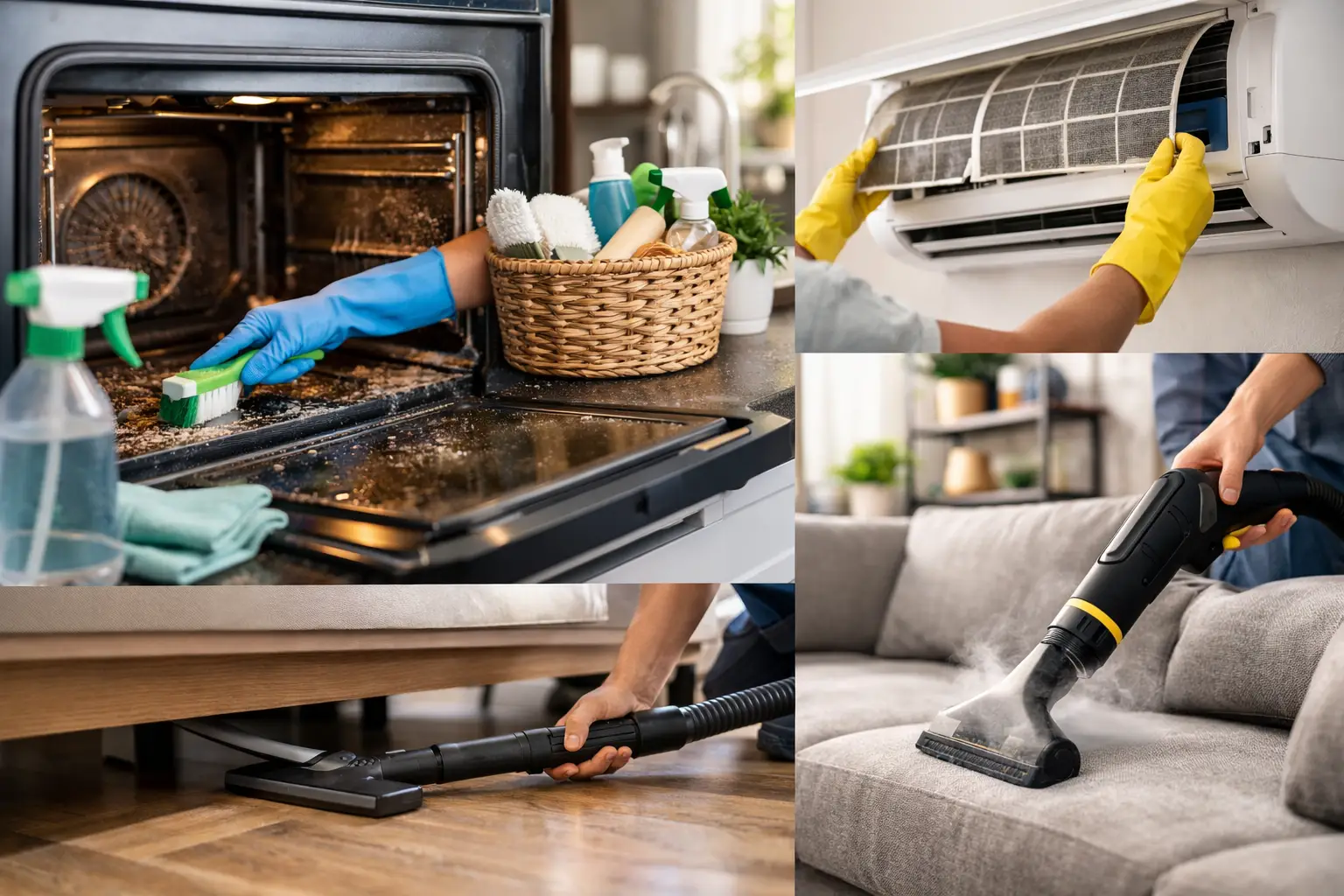
Use a vacuum with an upholstery attachment and work slowly across the seat, back, arms, seams, and crevices. A soft brush attachment can help lift pet hair from durable woven fabrics. For tight seams, use a crevice tool without pressing hard enough to pull or fray the material.
If a cushion is removable, vacuum both sides and the platform beneath it. Turn loose cushions occasionally so wear and soil do not collect in the same areas. This simple maintenance step can reduce how often deep cleaning is needed.
Always test the cleaner first
Even a cleaner labeled safe for upholstery can react differently with your specific fabric. Test it in a small, hidden location, such as the back edge of a cushion or the lower rear corner of the sofa.
Apply a small amount according to the product instructions, blot it with a clean white cloth, and allow the area to dry completely. Check for color transfer, fading, stiffness, water rings, or a change in texture. If the fabric looks unchanged, you can move forward carefully.
White microfiber cloths are best for this work because they make it easy to see whether dye is lifting from the upholstery. Avoid colored towels, printed paper towels, and rough scrub pads that may transfer color or damage the surface.
Treat spills by blotting, not rubbing
Fresh spills are easier to remove than stains that have had time to dry into the fibers. The key is to act quickly without pushing the spill deeper into the cushion.
Place a clean, absorbent cloth over the spill and press gently. Lift, reposition to a dry area of the cloth, and repeat. Do not rub in circles. Rubbing spreads the stain, roughens the fibers, and may drive liquid into the padding underneath.
For a water-safe fabric, lightly dampen a cloth with a small amount of upholstery cleaner or a mild solution recommended for the material. Work from the outside edge of the stain toward the center to prevent a larger ring from forming. Blot again with a second clean, lightly damp cloth if needed to remove cleaner residue.
Use as little liquid as possible. Upholstery should feel slightly damp during cleaning, never saturated. If liquid reaches the foam or stuffing, drying becomes much harder and odors can develop.
Match the method to the stain
Food, drinks, and everyday dirt often respond well to a suitable water-based upholstery cleaner on fabrics marked W or WS. Greasy stains can be more difficult because water alone may not break down oil. In those cases, use only a product designed for your fabric code and follow its directions exactly.
Pet accidents require prompt blotting and an odor treatment that is compatible with the upholstery. Avoid masking odors with heavy fragrance. If moisture has reached the cushion insert, surface cleaning may not fully solve the problem.
Ink, nail polish, paint, and mystery stains are high-risk situations. Home remedies found online can discolor fabric or set the stain permanently. A professional cleaner can assess the fiber type, stain source, and safest removal method before attempting a stronger treatment.
Clean the full section to avoid water marks
Spot cleaning is practical for a fresh spill, but it can sometimes leave a clean patch or water ring on a large cushion. If the care label permits water-based cleaning and a visible area is heavily soiled, lightly clean the entire cushion panel or arm section instead of treating only one small point.
Work in manageable sections using minimal solution and even, overlapping strokes. Blot away excess moisture as you go. The goal is an even result, not a wet surface.
Avoid steam cleaning unless the manufacturer specifically allows it and you understand how the fabric responds to heat and moisture. Steam can shrink certain fibers, loosen adhesives, distort velvets, and push moisture deep into the padding. Rental machines can also over-wet furniture when used too aggressively.
Dry upholstery completely and patiently
Drying is part of cleaning, not an afterthought. Open windows when weather allows, run ceiling fans, or use a portable fan to circulate air around the furniture. Keep cushions separated and standing on edge when possible so both sides can dry.
Do not sit on damp upholstery or replace cushions before the fabric and filling are fully dry. Pressure can create wrinkles, flatten padding, and trap moisture inside. Avoid using high heat from a hair dryer, which may shrink or stiffen sensitive fabrics.
Depending on humidity, fabric thickness, and how much solution was used, drying can take several hours or longer. In Hamilton’s humid summer weather, extra airflow can make a meaningful difference. If the sofa still smells damp after drying, the interior may have been over-wetted and should be assessed before mildew develops.
Prevent buildup between deeper cleanings
A few habits make upholstered furniture easier to maintain. Vacuum regularly, especially in homes with pets or children. Deal with spills as soon as they happen, and rotate cushions where the furniture design allows. Keep dark denim, heavily dyed blankets, and damp towels off light-colored upholstery to reduce dye transfer.
For families with pets, washable throws can protect the areas animals use most often. They are not a replacement for cleaning, but they can reduce hair, oils, and everyday soil on the sofa itself. Be cautious with fabric protectors as well. They can be useful on approved materials, but they should be compatible with the manufacturer’s care instructions and applied evenly.
When professional upholstery cleaning is the better option
Some furniture needs more than spot treatment. Call a professional when stains keep returning, the cushions have a persistent odor, the fabric has visible water rings, or the furniture has not been deep cleaned in years. It is also wise to get help with delicate materials, large sectional sofas, inherited pieces, and upholstery marked S or X.
A trained cleaning team can choose products and extraction methods based on the material rather than using a one-size-fits-all solution. At Get It Done Cleaning Services, careful upholstery cleaning is approached with the same attention to detail as a deep home clean: assess the surface, use appropriate products, control moisture, and leave the space feeling cared for.
Your furniture does a lot of daily work. A gentle routine, quick response to spills, and professional support when needed can help it stay comfortable, clean, and welcoming for years to come.