A vacant unit can look acceptable at first glance and still cost you time, complaints, and a delayed move-in. This property manager cleaning guide is built for the details that protect rental value: removing evidence of the previous tenancy, addressing high-touch areas, documenting condition, and preparing a space that feels genuinely ready for its next resident.
For property managers, cleaning is not simply a final task between tenants. It is part of turnover planning, resident satisfaction, maintenance coordination, and asset protection. A clear process helps your team move faster without cutting corners, whether you manage a single duplex or a full portfolio of apartments, condos, and commercial spaces.
Build a Cleaning Standard Before the Unit Is Vacant
The best time to define cleaning expectations is before keys are returned. A written turnover standard gives staff, vendors, and outgoing residents a shared definition of clean. It also prevents the common problem of discovering missed work only when the new tenant is scheduled to move in.
Your standard should separate normal wear from cleaning-related issues. Faded paint, worn flooring, and aging caulk are maintenance concerns. Grease inside an oven, pet hair in baseboards, food residue in cabinets, and soap buildup in showers are cleaning concerns. When these categories are clear, you can make fair decisions about deposits, work orders, and vendor scope.
A practical standard also identifies what is included in routine turnover cleaning and what requires a specialty service. For example, wiping kitchen cabinets may be routine, while heavy carpet staining, nicotine residue, mold concerns, or post-renovation dust may require additional time, equipment, or a different cleaning method.
Use Photos and a Simple Inspection Checklist
Take dated photos as soon as the unit is vacant, before cleaners or contractors begin work. This creates a useful record of the unit’s condition and helps you distinguish pre-existing damage from issues found during cleaning.
A room-by-room checklist keeps inspections consistent. Rather than writing that a bathroom is “clean,” confirm that the mirror is streak-free, the toilet is sanitized inside and out, fixtures are polished, exhaust vents are dusted, and floors are cleaned along edges and behind the toilet. Specific standards are easier to inspect and easier for a professional cleaning team to complete correctly.
Start With the Turnover Timeline, Not the Cleaning Crew
Cleaning should be scheduled around the full turnover sequence. If painters, flooring installers, plumbers, or maintenance technicians enter after the unit has been cleaned, they can leave dust, debris, fingerprints, and footprints behind. That creates repeat work and puts pressure on the final move-in date.
In most cases, begin with your inspection and maintenance assessment. Complete repairs, painting, and construction-related work first. Then schedule deep cleaning, followed by carpet or upholstery cleaning where needed. Finish with a final quality check close to move-in, especially if the unit sits vacant for several days.
There are exceptions. If a unit has heavy dirt or abandoned belongings, an initial cleanup may be necessary before maintenance work can begin safely. In that case, treat the first visit as a debris removal or rough clean, then schedule a detailed final clean once all trades have finished.
Focus on the Areas Residents Notice First
Residents form an opinion of a home within minutes. Entryways, kitchens, bathrooms, floors, and windows carry more weight than a clean closet shelf that nobody sees right away. That does not mean hidden areas should be skipped. It means your quality-control inspection should prioritize the places that make a unit feel fresh, sanitary, and well cared for.
Kitchen Cleaning That Protects the Property
The kitchen is often the most labor-intensive room in a turnover. Grease can settle on cabinet fronts, range hoods, backsplash surfaces, and nearby walls. Food particles and spills may be hidden under refrigerator drawers, inside the microwave, and along stove seams.
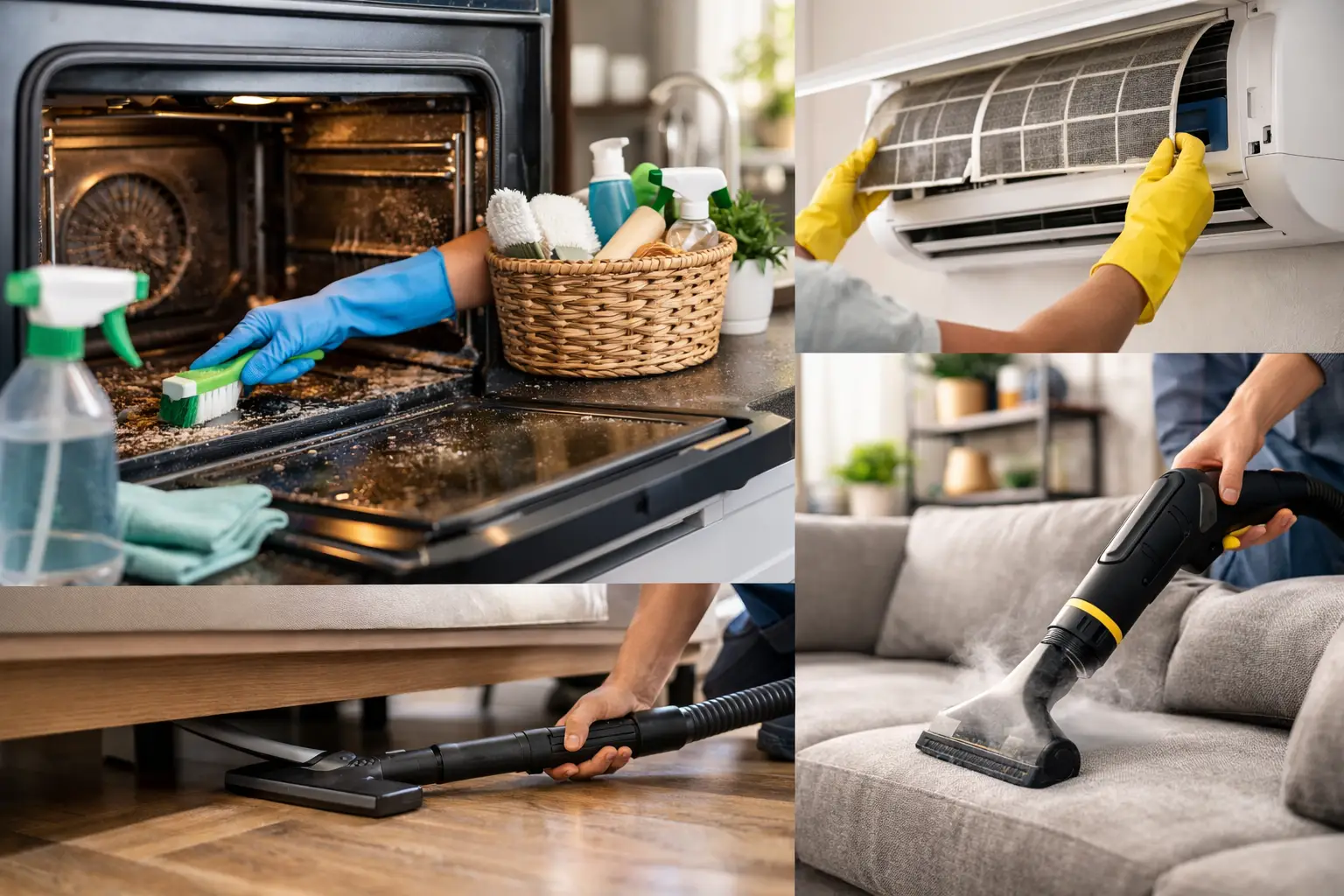
A proper kitchen clean should include the interior and exterior of appliances, cabinet interiors and handles, countertops, sinks, faucets, backsplash, light switches, and floors. Pulling appliances out when access allows is worth the effort. Crumbs, grease, and moisture behind a stove or refrigerator can attract pests and create odors that linger after a tenant moves in.
Appliance cleaning is especially valuable when a unit is being marketed at a higher rental rate. A clean oven and refrigerator signal care. A greasy range hood or stained microwave does the opposite, even if the rest of the unit looks good.
Bathrooms Need More Than a Quick Disinfecting
Bathrooms require both cleaning and close observation. Soap scum, hard-water marks, hair, and residue are obvious concerns, but cleaners can also help flag slow drains, loose fixtures, failing grout, damaged caulk, and signs of moisture problems.
Clean and sanitize toilets, tubs, showers, sinks, faucets, mirrors, vanities, shelves, vents, and floors. Pay close attention to grout lines, shower doors, and the areas behind the toilet. If mineral buildup is severe, it may take specialized products and extra labor. Rushing this step can leave behind a dull, neglected appearance even in an otherwise updated bathroom.
Floors, Carpets, and Odor Control
Flooring is one of the biggest visual indicators of unit condition. Hard floors should be vacuumed or swept first, then cleaned with a product appropriate for the surface. Using too much water on laminate or wood can cause damage, while the wrong chemical can leave haze or make floors slippery.
Carpets need more than vacuuming when there are visible spots, pet odors, or a noticeable change in color between traffic paths and protected areas. Professional carpet cleaning can improve appearance and remove embedded soil, but it cannot repair burns, permanent staining, or worn fibers. Set expectations accordingly when deciding whether cleaning or replacement is the better investment.
Odors deserve immediate attention. Open windows when possible, remove trash, clean drains, wipe cabinets, and inspect appliances and carpets. Covering odors with fragrance is rarely effective. The source must be removed, particularly in pet, smoke, or food-related situations.
Choose a Cleaning Partner With a Defined Scope
Price matters, but a low quote is not always the lowest turnover cost. If the scope is vague, you may lose time coordinating callbacks, inspecting missed details, or hiring another provider before move-in. A reliable cleaning partner should explain what is included, what is excluded, and when additional charges may apply.
Ask whether the team is trained and insured, whether they bring supplies and equipment, and how they handle issues discovered during service. Eco-friendly products can be a practical choice for homes with children, pets, or residents sensitive to harsh scents, but cleaning effectiveness still depends on using the right product and method for each surface.
For Hamilton property managers, Get It Done Cleaning Services can support routine turnovers, detailed move-in and move-out cleaning, carpet and upholstery cleaning, appliance cleaning, post-renovation cleanup, and recurring common-area service. The advantage of using one dependable provider is not just convenience. It is having a consistent standard across your properties.
Final Inspection: Check the Details That Cause Callbacks
Complete your final inspection after cleaning is finished and before the resident receives keys. Walk the unit in natural light if possible. Turn on faucets, flush toilets, open cabinets, check appliances, and look from multiple angles. Smudges on stainless steel, dust on ceiling fans, debris in window tracks, and hair in a shower can be easy to miss until a resident points them out.
If you manage multiple units, keep notes on recurring issues. A building with frequent dust buildup near vents may need HVAC attention. Repeated moisture around a bathroom vanity may be a plumbing concern, not a cleaning failure. These patterns help you reduce future turnover work instead of treating every problem as a one-time surprise.
A well-cleaned unit tells a new resident that their home has been prepared with care. That first impression supports a smoother move-in, fewer immediate service requests, and a property that feels worth the rent from day one.