Walk into an office first thing Monday morning and you can tell right away whether the cleaning was handled well. Smudged glass, dusty desks, streaky floors, and overflowing trash send a message before anyone says a word. If you’re wondering how to do commercial cleaning the right way, the answer starts with structure. Good commercial cleaning is not just about making a space look tidy. It is about health, presentation, consistency, and doing the work thoroughly enough that employees and customers notice the difference.
What commercial cleaning actually includes
Commercial cleaning covers a wide range of business spaces, and the exact scope depends on the building, traffic level, and industry. A small office with ten employees needs a different routine than a medical office, retail store, or industrial workspace. That is why a one-size-fits-all checklist usually falls short.
At its core, commercial cleaning means maintaining shared business spaces in a way that supports hygiene, appearance, and day-to-day operations. That usually includes restrooms, floors, break rooms, entryways, high-touch surfaces, glass, trash removal, and dust control. In some facilities, it also includes carpet care, upholstery cleaning, post-construction cleanup, and more detailed sanitizing.
The biggest mistake people make is treating commercial cleaning like house cleaning done at a larger scale. Some techniques overlap, but commercial spaces have different traffic patterns, compliance concerns, and expectations. The work has to be more systematic.
How to do commercial cleaning step by step
The best way to approach commercial cleaning is to follow a repeatable process. That keeps standards consistent and makes it easier to train staff, manage time, and avoid missed areas.
Start with a site assessment
Before cleaning begins, walk the space and note the surfaces, problem areas, and cleaning frequency required. Carpeted offices, tile restrooms, glass partitions, lunchrooms, and reception areas all need different tools and products. You should also identify high-touch points such as door handles, elevator buttons, light switches, shared desks, and faucet handles.
This step matters because overcleaning wastes labor and supplies, while undercleaning leads to complaints and hygiene issues. A space with heavy foot traffic near the entrance may need daily floor attention, while a conference room used once a week may only need touch-up service between deeper cleanings.
Gather the right supplies and equipment
Commercial cleaning works best when supplies are chosen for the space instead of grabbed at random. Microfiber cloths, mop systems, vacuums with proper filtration, disinfectants, glass cleaners, neutral floor cleaners, restroom cleaners, and trash liners are common basics. Color-coded cloths and mop heads can help reduce cross-contamination, especially between restrooms, kitchens, and general workspaces.
Eco-friendly products are often a smart choice for offices and customer-facing businesses because they reduce harsh residue and strong odors. That said, greener products still need to be effective. The goal is not just to use gentler formulas. It is to clean thoroughly without creating a harsh environment for staff or visitors.
Clean from top to bottom
A reliable rule in commercial cleaning is to work from higher surfaces down to lower ones. Dust vents, shelves, ledges, and window sills before wiping desks and counters, then finish with floors. This prevents dust and debris from falling onto surfaces you already cleaned.
The same logic applies within each room. Start with dry tasks like dusting and cobweb removal, move to surface cleaning and sanitizing, then finish with trash removal and floor care. This sequence keeps the work efficient and reduces rework.
Focus on touch points and shared areas
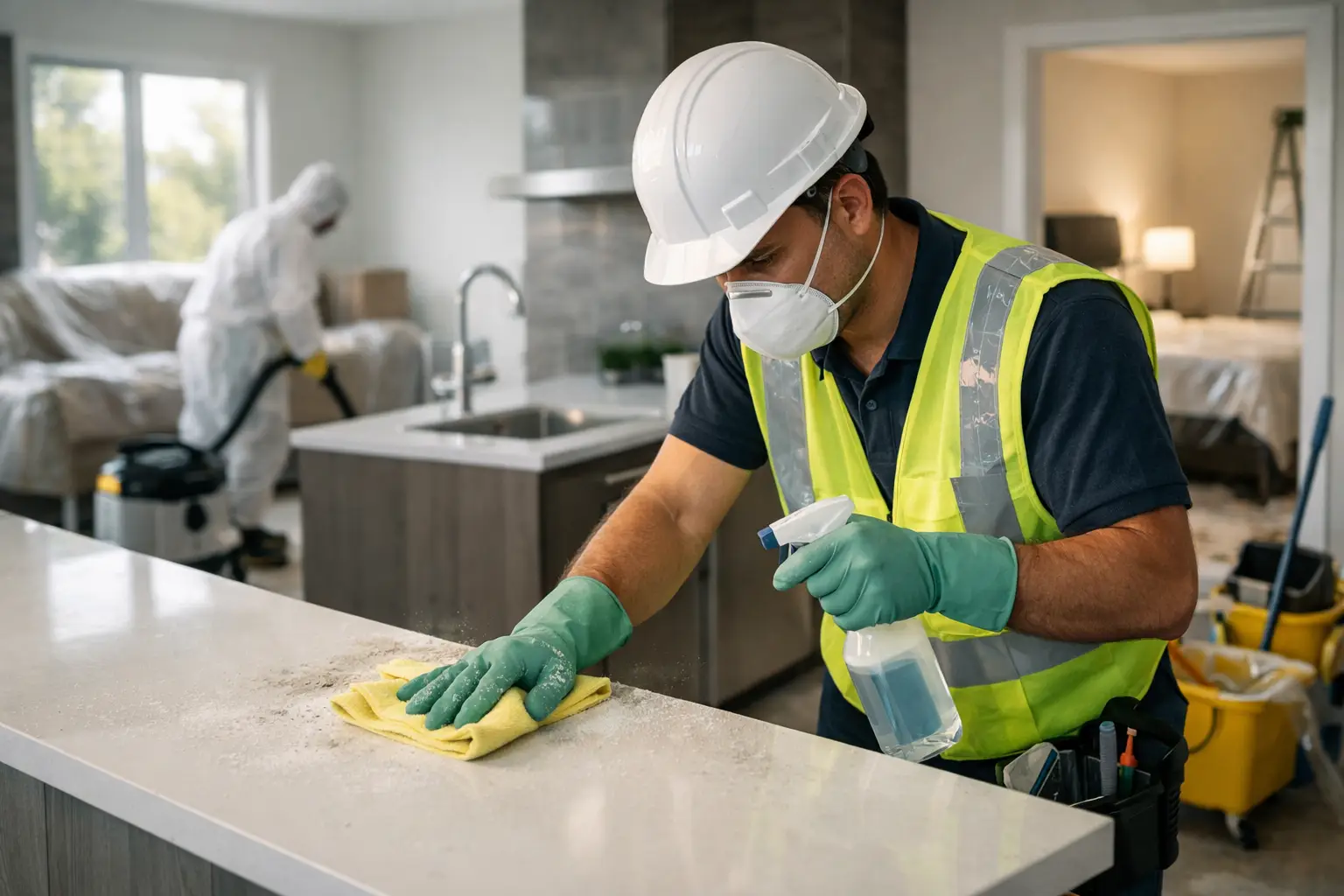
In homes, visual tidiness often gets the most attention. In commercial settings, hygiene matters just as much. Shared spaces are where germs spread fastest, so disinfecting touch points should be built into every regular cleaning visit.
Reception counters, door pulls, break room tables, appliance handles, restroom fixtures, and shared equipment need routine attention. If the building has a higher volume of visitors, these areas may need more frequent service than the rest of the space. A nice-looking office that neglects shared surfaces is only doing half the job.
Handle restrooms with extra care
If there is one area where standards cannot slip, it is the restroom. Clean and sanitize toilets, urinals, sinks, counters, partitions, mirrors, dispensers, and floors. Refill soap, paper towels, and toilet paper before they run low, not after someone complains.
Restrooms also need odor control, but masking smells is not the same as cleaning. Lingering odor usually points to buildup around fixtures, drains, grout lines, or trash bins. A proper commercial cleaning routine addresses the source, not just the symptom.
Finish floors based on surface type
Floor care can make or break the overall appearance of a business. Vacuum carpets thoroughly, paying special attention to entryways and edges. Hard floors may need sweeping, damp mopping, scrubbing, or periodic machine cleaning depending on the material and soil level.
This is one area where shortcuts show quickly. Dirty mop water, the wrong chemical, or poor technique can leave streaks, residue, or damage. Different flooring materials require different care, so it helps to stick with manufacturer-safe products and methods.
Build a schedule that matches the building
A solid commercial cleaning plan is not just about what gets cleaned. It is also about when. Daily, weekly, and monthly tasks should be separated clearly so nothing gets overlooked.
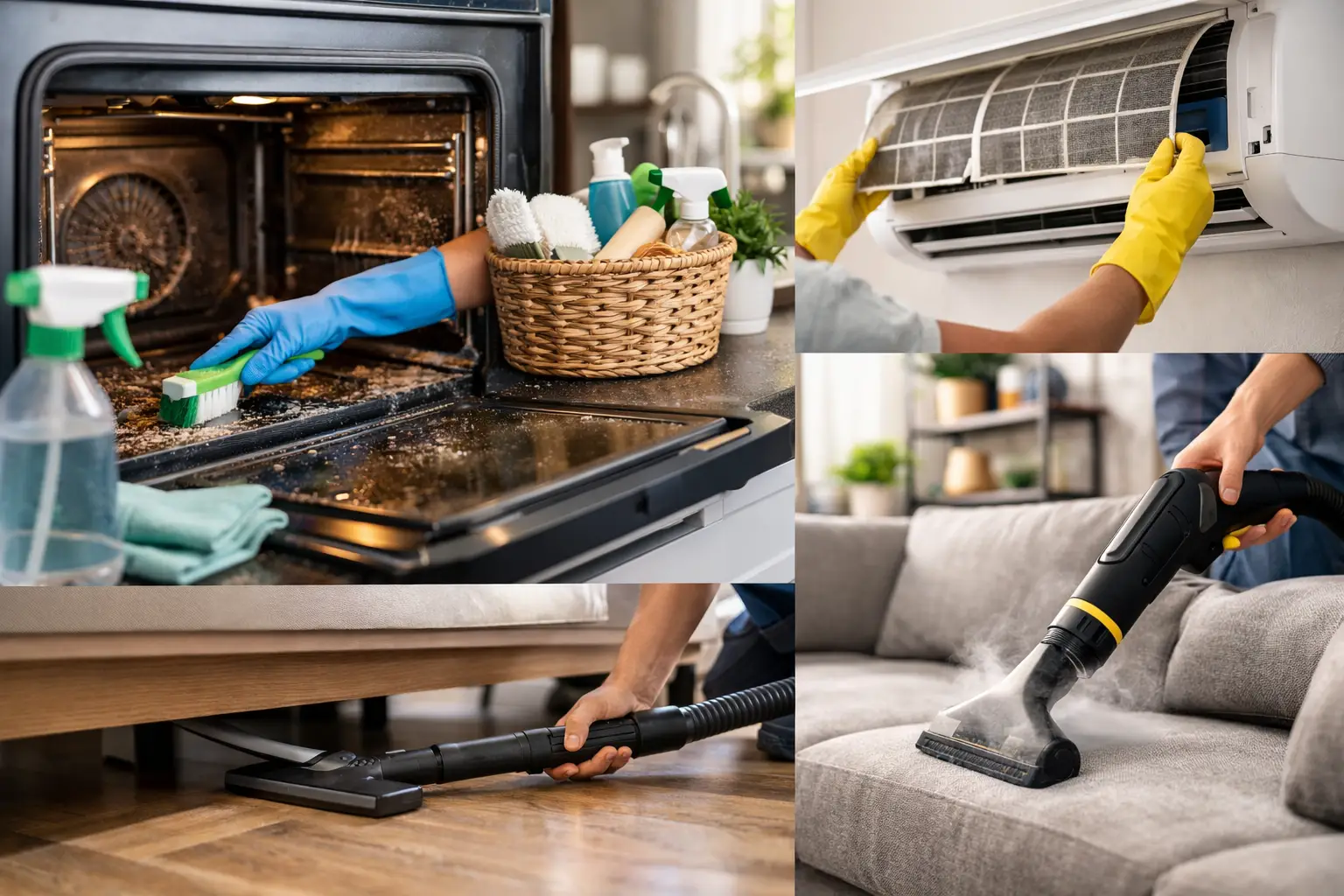
Daily work often includes trash removal, restroom cleaning, disinfecting touch points, tidying break rooms, and floor care in high-traffic areas. Weekly tasks may include more detailed dusting, spot cleaning glass, polishing fixtures, and cleaning under furniture where practical. Monthly or periodic tasks can include deep carpet cleaning, baseboard detail work, high dusting, appliance interiors, and floor machine service.
The right schedule depends on how the space is used. A law office may need quiet after-hours cleaning with close attention to presentation. A busy retail location may need more frequent entryway and restroom service. A property manager overseeing multi-unit common areas may need a rotating plan that balances budget with appearance. It depends on traffic, use, and expectations.
Quality control matters more than speed
Anyone can rush through a building and say it was cleaned. The real question is whether the work holds up when people start using the space again. That is why quality control matters.
Use a clear checklist for each visit. Inspect finished work regularly. Look for recurring trouble spots, such as corners collecting dust, fingerprints on glass, or trash bins being emptied but not wiped down. These details are where trust is built or lost.
For business owners, consistency often matters more than a flashy one-time result. They want to know the cleaning will be handled properly every time, whether it is a regular service visit or a one-time deep clean before inspections, client meetings, or reopening after construction.
Common mistakes to avoid
One common mistake in how to do commercial cleaning is using too much product. More chemical does not mean cleaner surfaces. It often means residue, streaks, and extra time fixing avoidable issues. Another mistake is using the same cloth or mop across multiple areas, especially restrooms and food prep spaces.
Skipping corners, edges, and low-visibility zones is another problem. These areas may not stand out right away, but over time they make the whole facility feel neglected. Poor timing can also create issues. Cleaning during peak business hours may interrupt staff and customers unless the service plan is built around that reality.
There is also the staffing side. If cleaners are not trained on the actual building, products, and expectations, standards become inconsistent fast. That is one reason many local businesses prefer professional cleaning teams with insured staff, clear scope, and dependable scheduling.
When professional service makes more sense
Some businesses try to handle cleaning in-house, and for very small spaces that can work for a while. But as traffic increases, expectations rise, or staffing becomes unreliable, the cracks show. Commercial cleaning takes planning, oversight, and enough labor to do the work properly without cutting corners.
A professional team can usually deliver better consistency because the work is structured. There are checklists, service tiers, proper products, and accountability if something gets missed. For offices, retail spaces, and managed properties, that often saves time and removes one more operational headache.
For businesses in Hamilton, working with a dependable local company such as Get It Done Cleaning Services can also make scheduling easier when you need recurring service, deeper detail cleaning, or help after a renovation or move.
Commercial cleaning is never just about appearances. It affects how a business feels to employees, customers, tenants, and visitors the moment they walk in. When the work is organized, detailed, and matched to the space, the results do more than keep things neat. They help the whole business run better.