A clean office should not be a guessing game. If your team walks into dusty vents, streaked glass, and restrooms that look halfway done, it affects more than appearances. It changes how employees feel at work, how customers view your business, and how much time managers spend chasing small problems. That is why business cleaning solutions need to be practical, consistent, and built around how your space is actually used.
For most businesses, cleaning is not one task. It is a mix of daily upkeep, periodic deep cleaning, and specialty work that keeps the entire property in good shape. The right plan supports health, protects surfaces, and keeps your workplace ready for staff, visitors, and clients without adding more work to your day.
What business cleaning solutions should really cover
A lot of companies think about cleaning only when something looks dirty. By that point, the problem is already visible. Strong business cleaning solutions are designed to prevent buildup before it starts and to address the areas employees and customers notice first.
That usually begins with common spaces. Lobbies, entryways, break rooms, conference rooms, and restrooms shape first impressions quickly. Floors need regular care, touchpoints need sanitizing, trash needs to be handled on schedule, and high-traffic areas need more attention than spaces used once in a while.
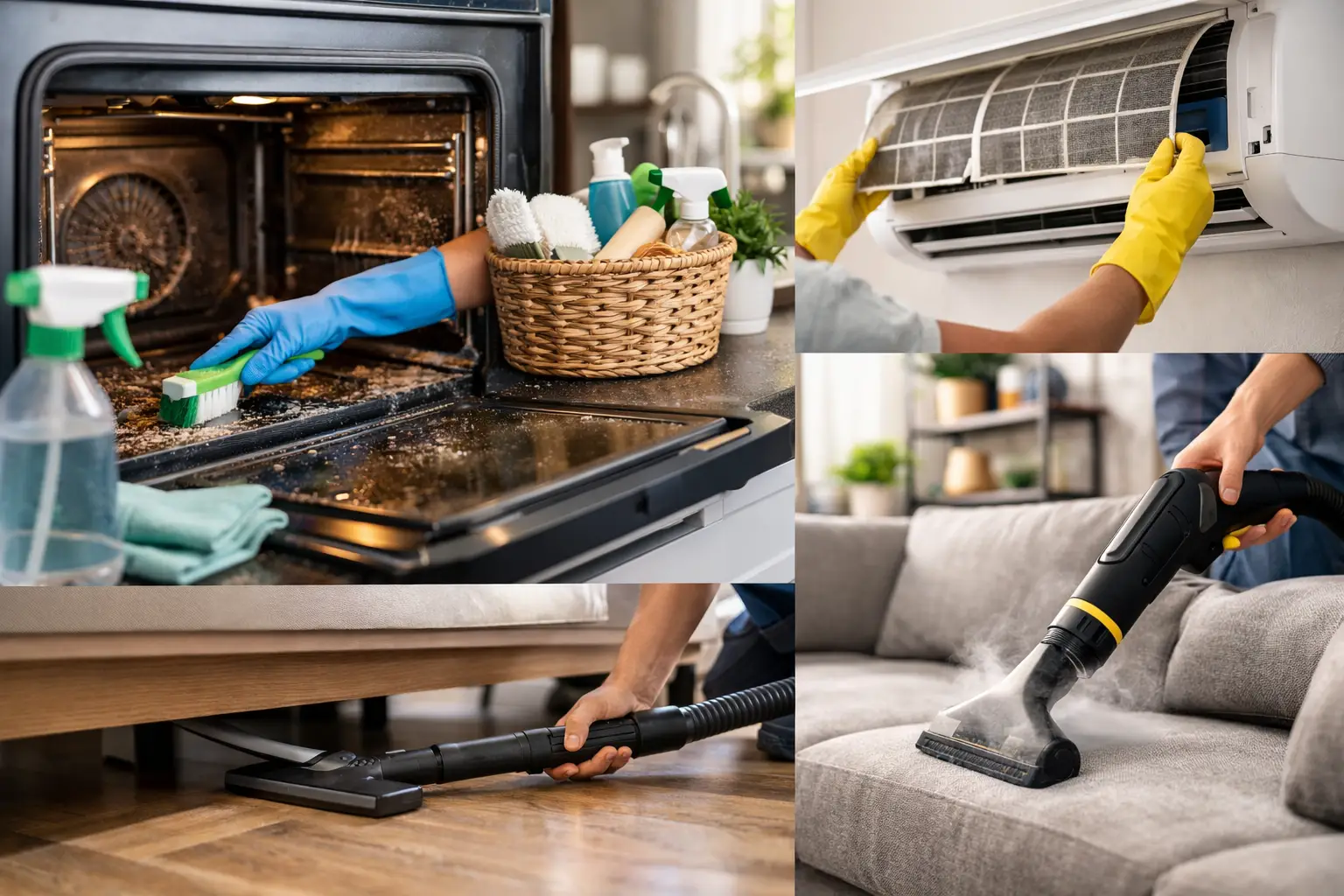
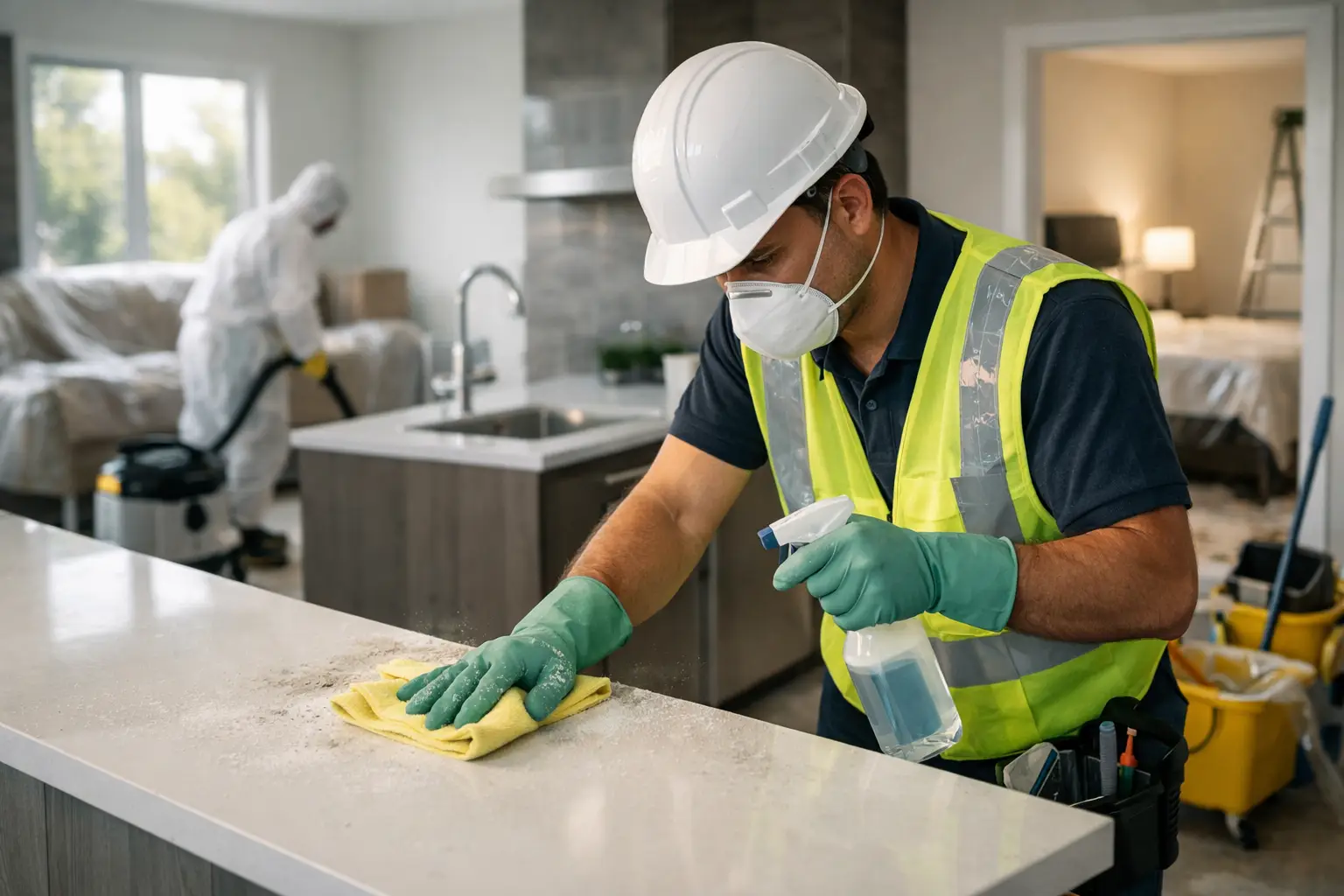
It also means looking beyond surface-level tasks. Carpets hold odors and debris long after vacuuming. Upholstery collects dust and stains. Post-renovation spaces often carry fine dust into vents, trim, and corners that standard cleaning misses. If your business only books basic service when the space starts looking tired, you often end up paying more later for corrective work.
One size rarely fits every business
A medical office does not need the same service schedule as a small retail store. A warehouse office has different pressure points than a professional suite with daily client visits. Good cleaning plans are built around traffic, layout, surface types, and how quickly mess builds up in real conditions.
That is where many business owners get frustrated. They are offered a flat package that sounds simple but leaves out the details that matter. Maybe the floors are handled, but appliance cleaning in the staff kitchen is not. Maybe the bathrooms are cleaned, but partition dusting and door touchpoints are skipped. Maybe the service is technically affordable, but the checklist is too light to solve the actual problem.
A better approach is to define the scope clearly. What gets cleaned each visit, what gets rotated weekly or monthly, and what counts as an add-on should never be vague. Clear service tiers make it easier to budget and easier to hold the work to a standard.
The difference between routine service and deep cleaning
Routine service keeps a workplace presentable and sanitary. It usually includes floor care, restroom cleaning, trash removal, dusting of accessible surfaces, and wipe-downs in shared areas. For many offices, that is enough to maintain a solid day-to-day baseline.
Deep cleaning is different. It is meant to reset the space. That may include baseboards, buildup around fixtures, detail work in corners, interior glass, upholstery care, appliance interiors, or extra attention to neglected surfaces. It takes more time, but it also extends the life of the space and improves the results of every regular visit that follows.
If a property has gone months without detailed service, jumping straight into recurring maintenance can lead to disappointment. The team may be working hard, but they are trying to maintain a space that was never properly reset. In that case, starting with a deep clean is often the smarter move.
Why specialty services matter more than most owners expect
Many businesses do not need specialty cleaning every week, but almost every business needs it eventually. Carpets in waiting areas get stained. Upholstered seating starts holding odors. A move-out or tenant turnover needs more than a surface wipe. Renovation dust settles into places that look clean until sunlight hits them.
These situations are where broad-service providers often make life easier. Instead of coordinating one company for recurring cleaning, another for carpets, and another for post-construction cleanup, you can work with one trained and insured team that understands the property and the expected standard.
That kind of continuity matters. It reduces scheduling headaches, limits miscommunication, and gives you a clearer sense of what is being done each time. For property managers and busy business owners, convenience is not a luxury. It is part of what makes a cleaning solution worth paying for.
What to look for in a cleaning provider
Reliability comes first. A missed cleaning or rushed visit creates instant problems, especially in customer-facing spaces. You need a provider that shows up on schedule, follows a documented checklist, and communicates clearly if anything changes.
Insurance and training matter just as much. Commercial spaces contain expensive flooring, electronics, glass, fixtures, and shared surfaces that need the right products and methods. Eco-friendly products are also worth asking about, especially in offices where staff spend long hours indoors. Safer products can reduce harsh odors and support a healthier environment without sacrificing results.
Transparency is another major factor. If pricing sounds low but the scope is unclear, you may be comparing numbers instead of value. A dependable provider explains what is included, what is extra, and how often different tasks should be performed based on your space.
How often should a business be cleaned?
It depends on traffic and use. A busy office with shared restrooms, a kitchen, and daily visitors may need service several times a week. A smaller professional office may do well with weekly cleaning plus periodic deep cleaning. Spaces with public foot traffic, food service, pets, or frequent deliveries usually need more attention than businesses with low daily occupancy.
Season also plays a role. Wet weather brings salt, mud, and floor damage. Summer can mean more dust. Cold and flu season often raises expectations around sanitizing touchpoints and common areas. A cleaning plan that works in one quarter may need small adjustments in another.
The best schedule is the one that keeps standards steady without overpaying for unnecessary visits. That balance comes from a walkthrough, a realistic assessment of the space, and a provider willing to recommend what fits instead of pushing the biggest package.
Business cleaning solutions and employee experience
Cleanliness affects morale more than many leaders realize. Employees notice when restrooms are consistently stocked and clean, when break rooms feel usable, and when dust and clutter are under control. These details send a message about how the workplace is managed.
There is also a practical side. Cleaner workspaces can support better indoor comfort, reduce distractions, and make shared environments easier to use. No one does their best work in a space that feels neglected.
For businesses hiring staff, meeting clients, or trying to retain tenants, presentation matters. A clean environment helps people feel that the business is organized, attentive, and trustworthy. That is not marketing language. It is the impression people form in the first few minutes of walking through your door.
When cheaper cleaning costs more
Low-cost service can look appealing, especially if you are trying to control overhead. But if the cleaning is inconsistent, incomplete, or done with little attention to detail, the hidden costs show up fast. Managers spend time following up. Employees complain. Customers notice. Floors wear out sooner, and neglected buildup turns into a bigger job later.
Affordable service is not the same as bargain service. The better value usually comes from a company that offers flexible scheduling, clear deliverables, and recurring options that reduce cost without cutting corners. That is the difference between simply checking a box and solving the problem.
For local businesses in places like Hamilton, working with a company that understands day-to-day service expectations can make that process much easier. Get It Done Cleaning Services, for example, focuses on practical scope, flexible scheduling, and detail-driven work that helps businesses keep their spaces consistently professional.
A smart cleaning plan starts with the real issues
If your main problem is restroom standards, your plan should start there. If carpets are carrying odors, routine vacuuming will not be enough. If your office always looks fine until sunlight exposes dust on trim, vents, and glass, then your current service is missing the details people actually notice.
Good cleaning is not about buying the biggest package. It is about matching the right services to the right problem and building a schedule you can count on. When that happens, the space stays healthier, looks better, and demands less of your attention.
The best business cleaning solutions give you something every busy owner wants more of – fewer things to worry about when the doors open each day.