
Fresh paint looks great. The fine dust coating your baseboards, vents, light fixtures, and floors does not.
That is why a solid post renovation cleaning guide matters. After any remodel, even a small bathroom update or a one-room flooring job, leftover dust and construction residue can settle far beyond the work area. What looks finished at a glance often still needs detailed cleaning before the space feels healthy, comfortable, and actually ready to use.
Why post renovation cleaning is different
Regular house cleaning is about maintenance. Post-renovation cleaning is about removal. You are not just wiping visible dirt. You are dealing with drywall dust, sawdust, adhesive residue, paint specks, caulk smears, packaging debris, and particles that travel into vents, corners, and nearby rooms.
This is where many people underestimate the job. Standard dusting tools can simply move fine debris around. Some surfaces need a gentler approach to avoid scratching, while others need stronger degreasers or residue removers. If floors, counters, glass, and fixtures were newly installed, the cleaning method matters just as much as the cleaning itself.
There is also a timing issue. If contractors are still doing touch-ups, a full clean too early can mean doing the work twice. If you wait too long, dust can keep circulating through the property and settle deeper into fabrics and vents.
When to clean after a renovation
The best time for post-renovation cleaning is after all major construction work is complete, including sanding, painting, cutting, and final punch-list fixes. If trades are still entering and leaving, tracking dust and debris through the property, a final clean will not hold up for long.
In some cases, a phased approach works better. A rough clean during the project can remove heavy debris and make the site safer. The detailed clean should come at the very end, once tools, materials, and protective coverings are gone.
For larger projects, it also helps to let dust settle for a short period before the final cleaning begins. Fine particles stay airborne longer than most people expect, especially after drywall and woodwork.
Start with safety and the right supplies
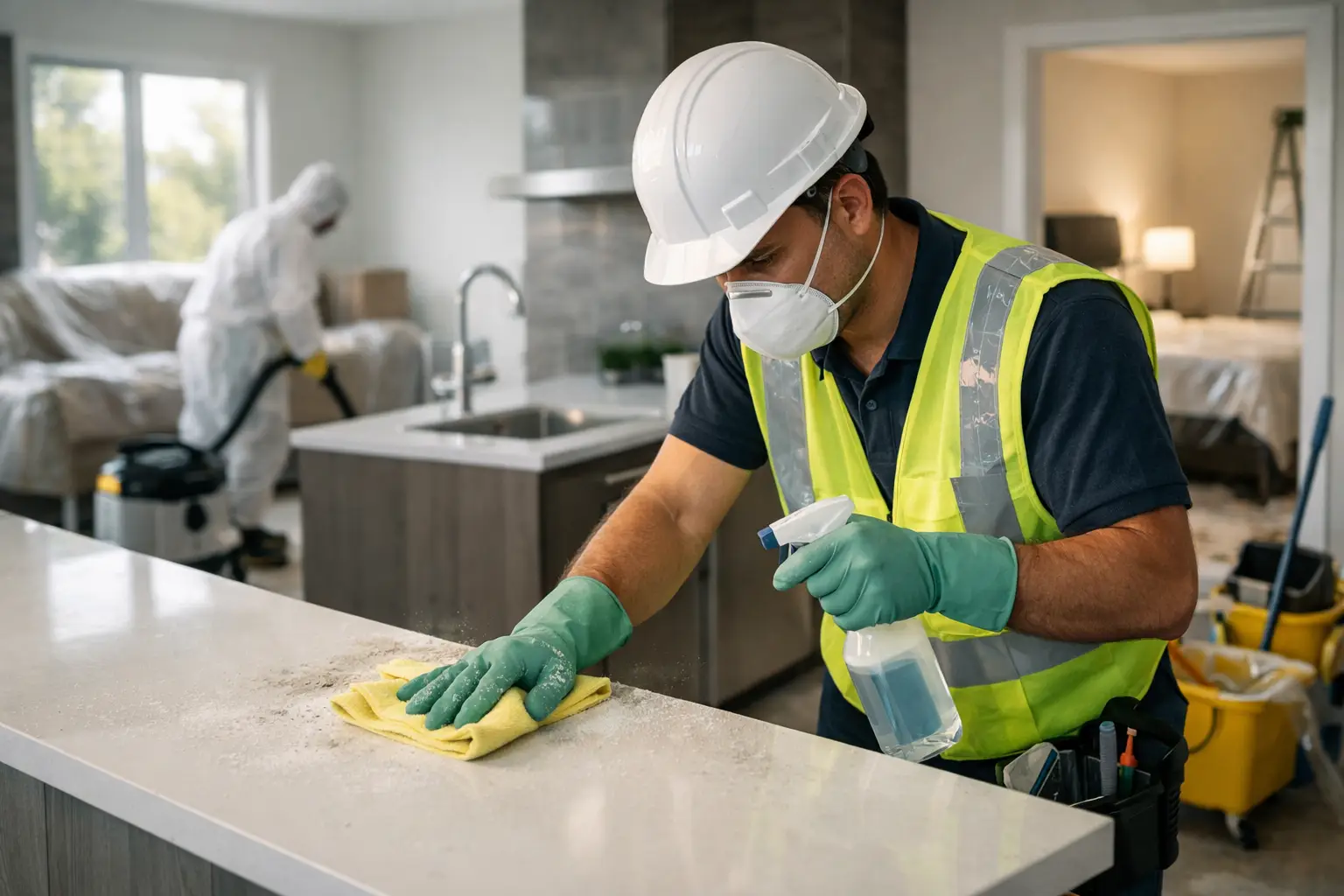
Before cleaning, open windows if weather allows and make sure the area has airflow. Wear gloves and a quality dust mask, especially if drywall dust is present. Fine particles can irritate the eyes, nose, and throat, and sweeping them aggressively can make the problem worse.
A vacuum with a HEPA filter is one of the most useful tools for this type of job. Microfiber cloths are better than dry dusters because they trap particles instead of scattering them. You may also need a soft mop, gentle all-purpose cleaner, glass cleaner, scraper made for glass-safe use, and surface-specific products for stone, wood, or specialty finishes.
What you should not do is grab the stiff broom and start sweeping everything at once. On hard floors, that can kick dust back into the air and scratch surfaces if grit is present.
A room-by-room post renovation cleaning guide
The most effective way to clean after a renovation is top to bottom, room by room. That keeps dust from falling onto surfaces you already cleaned.
Ceilings, vents, and high surfaces
Start with ceilings, corners, air vents, trim tops, and light fixtures. These areas catch more dust than people realize, especially when sanding or cutting happened nearby. Vacuum first with a brush attachment where possible, then wipe with a damp microfiber cloth.
Vents deserve extra attention. If dust built up around them during the project, turning the HVAC system back on can spread particles through the home. In lighter renovation jobs, cleaning the visible vent covers may be enough. In heavier projects, it may make sense to inspect the duct system as well.
Walls, trim, doors, and baseboards
Walls may not always need full washing, but they usually need careful dust removal. A dry-looking wall can still hold a layer of fine powder. Use a soft microfiber cloth or dust mop first. If there are smudges or splatters, test any cleaner in a small area before using it widely, especially on fresh paint.
Trim, door frames, and baseboards often collect the heaviest settled dust. These areas are easy to miss during a quick cleanup and can make the whole room still feel unfinished.
Windows, tracks, and glass
Windows usually show renovation residue right away. You may see fingerprints, labels, dust film, caulk traces, or paint specks. Clean the frames and tracks before the glass so you are not pushing debris back onto a finished surface.
Be careful with scraping. Razor use on glass can help in some cases, but only if done correctly and only on suitable surfaces. Tinted glass, specialty coatings, and some newer finishes can be damaged by the wrong tool or technique.
Cabinets, counters, and built-ins
Inside cabinets and drawers often get skipped, but they collect dust during installation and finishing work. Wipe interiors thoroughly before loading dishes, food, linens, or office supplies back in.
Countertops need product-specific care. Natural stone, laminate, quartz, butcher block, and solid surface materials do not all respond the same way to cleaners. A strong chemical that cuts adhesive on one surface may dull or stain another. When in doubt, use the mildest effective option and follow manufacturer care instructions.
Floors
Floors usually need more than one pass. Vacuum slowly with the right floor attachment, paying extra attention to corners, edges, and transitions between rooms. After that, mop or wipe based on the flooring type.
Wood and laminate floors should not be oversaturated. Tile can usually handle more moisture, but grout lines may trap dust and need extra attention. If the renovation involved removing old flooring, expect debris to settle under edges and in nearby rooms too.
Carpet is a separate challenge. Fine construction dust can sink into the fibers and backing. A standard vacuum may remove surface dust, but deeper extraction is often needed to get the carpet truly clean again.
Hidden areas people forget
A good post renovation cleaning guide has to include the spots that do not stand out right away. Switch plates, outlet covers, closet shelves, fan blades, window sills, appliance tops, and behind toilets all tend to hold dust after remodeling. The same goes for door hinges, handles, and the tops of tall furniture if items remained in the space during construction.
If the renovation happened in one room, do not assume the rest of the property is untouched. Dust travels. Hallways, stair rails, adjacent bedrooms, and return air vents often need more attention than expected.
What to do with stubborn residue
Not all post-construction mess is dry dust. You may also be dealing with silicone smears, sticker adhesive, grout haze, dried paint, or caulk residue. These require a more targeted approach.
The trade-off is speed versus surface protection. Stronger removers can save time, but using the wrong one on a new fixture, floor, or countertop can cause permanent damage. That is why product matching matters. If you are unsure what was installed, check with the contractor or supplier before treating the surface.
Sometimes the safest move is to leave difficult residue to a professional cleaning team that handles post-renovation work regularly. This is especially true for new glass, delicate finishes, natural stone, and high-end flooring.
When DIY makes sense and when to call professionals
A small project, like repainting a bedroom or replacing a vanity, may be manageable on your own if you have time, patience, and the right equipment. The bigger the project, the more value there is in professional help.
A professional team can usually clean faster and more thoroughly because the work is structured, detailed, and repeatable. They know where dust hides, how to protect new surfaces, and how to handle heavy cleanup without turning it into a second renovation problem. For homeowners, renters, property managers, and business owners on a schedule, that reliability matters.
For example, if you are preparing a property for move-in, reopening an office, or trying to get a renovated space usable without losing another full weekend, outsourcing the final clean is often the practical choice. Companies such as Get It Done Cleaning Services focus on that detailed finish people expect once the construction crew is gone.
How to know the job is actually finished
The space should not just look clean in bright daylight from the doorway. Run your hand along a baseboard, check the top of a door frame, open a drawer, and look at the floor edges. If you still feel grit or see a dust film, there is more work to do.
A properly cleaned post-renovation space feels different. The air is clearer. Surfaces feel smooth, not chalky. Floors stop leaving residue on socks. Glass looks transparent instead of cloudy. That is when the renovation finally starts to feel complete.
The last step is simple – slow down enough to clean with care, or bring in professionals who will. After all the time and money that went into the renovation, the final cleanup is what lets you enjoy the result the way you planned.